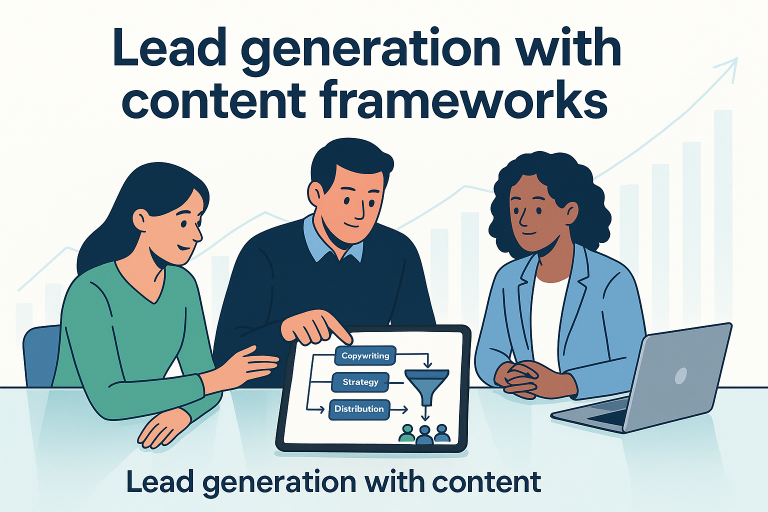
Content marketing ROI measures the financial return generated from your content investment. It proves whether your content efforts drive real business results. This guide shows you 9 practical steps to track, calculate, and improve your content marketing performance. You’ll learn exactly how to demonstrate content value to stakeholders and optimize for better results.
Understanding Content Marketing ROI: Definitions and Importance
Content marketing ROI isn’t just a metric. It’s the language that translates your content efforts into business value. Before diving into measurement methodologies, let’s establish exactly what content marketing ROI means and why it matters for your organization.
Content marketing ROI is calculated using this formula: [(Revenue – Investment) / Investment] × 100. This percentage shows how much revenue you generate relative to your content spending. According to the Content Marketing Institute, companies with documented content strategies report ROI that’s 13x higher than those without strategic approaches.
Why measuring content ROI matters:
- Justifies marketing budget allocation
- Identifies highest-performing content types
- Enables data-driven content decisions
- Aligns marketing activities with business goals
- Demonstrates marketing’s contribution to revenue
Content ROI differs from vanity metrics like page views or social shares. While these engagement metrics have value, they don’t directly demonstrate financial impact. Businesses need content marketing ROI measurement to connect marketing activities with actual business outcomes.
With a clear understanding of what content marketing ROI means, we can now establish the strategic goals that form the foundation of effective measurement.
Setting Strategic Goals: The Foundation of ROI Measurement
Measuring content marketing ROI begins with establishing clear, strategic goals aligned with business objectives. Without this foundation, even the most sophisticated analytics won’t deliver meaningful insights.
Every content initiative should support specific business goals. Map your content objectives to these common categories:
SMART Content Marketing Goals Framework
- Specific: “Increase organic traffic to product pages by 30%” not “improve website traffic”
- Measurable: Define exact metrics and tracking methods
- Achievable: Based on historical data and available resources
- Relevant: Directly supports business objectives
- Time-bound: Set clear timeframes for evaluation
Content Goal Categories
| Goal Type | Business Objective | Content Example | Primary Metrics |
| Awareness | Brand recognition | Thought leadership articles | Impressions, reach, traffic |
| Engagement | Audience building | Interactive guides | Time on page, shares, comments |
| Conversion | Lead generation | Whitepapers, webinars | Downloads, sign-ups, inquiries |
| Retention | Customer loyalty | Customer success stories | Repeat purchases, referrals |
Different business types require tailored goal approaches. B2B companies often focus on lead quality metrics like SQL conversion rates, while B2C businesses might prioritize average order value or purchase frequency.
In my 14 years of marketing experience, I’ve found that companies who align content goals with specific business objectives achieve 3-4x better ROI than those with disconnected strategies. This alignment creates clear pathways for measurement.
With your strategic goals established, you now need the right metrics to track progress toward your content marketing ROI success.
Essential Content Marketing Metrics That Demonstrate ROI
With your strategic goals established, the next step is selecting the right metrics to track. Not all content marketing metrics contribute equally to ROI calculation. Here’s how to identify and track the ones that matter most.
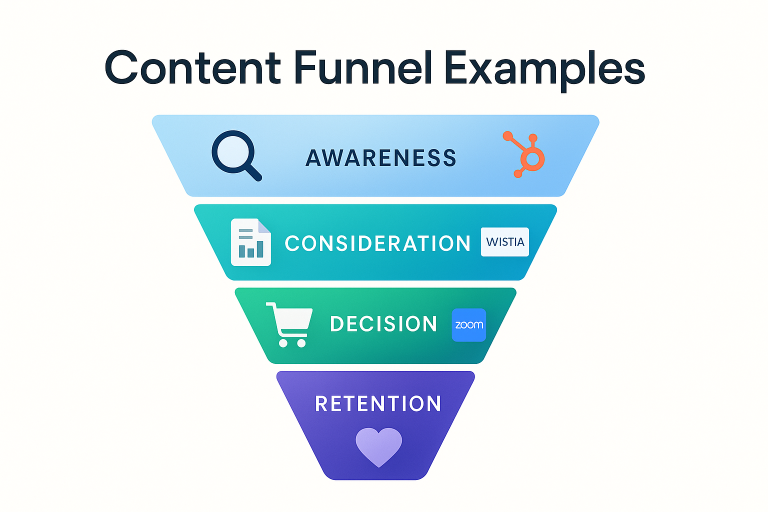
The most effective approach organizes metrics according to the customer journey. Content funnels guide prospects from awareness to decision, with different metrics becoming relevant at each stage:
Awareness Stage Metrics
- Organic traffic: Monthly visitors from search engines
- Search visibility: Percentage of target keywords ranking in top positions
- Social reach: Number of impressions on social platforms
- Brand mentions: Frequency of company mentions across web
Consideration Stage Metrics
- Page engagement: Average time on page, bounce rate, scroll depth
- Return visitors: Percentage of audience returning within 30 days
- Content downloads: Number of resource downloads
- Email signups: New subscribers from content pages
Conversion Stage Metrics
- Conversion rate: Percentage of visitors completing desired actions
- Cost per lead: Content investment divided by leads generated
- Lead quality score: Qualification rating of content-generated leads
- Content-attributed pipeline: Sales opportunities influenced by content
Retention/Loyalty Metrics
- Customer lifetime value (CLV): Total revenue from average customer
- Repeat purchase rate: Percentage of customers buying again
- Content-influenced renewals: Existing customers engaging with content who renew
- Customer referral rate: New customers acquired through referrals
Financial Metrics
- Content cost: Total investment in creation, distribution, and tools
- Revenue attribution: Sales directly and indirectly tied to content
- Customer acquisition cost (CAC): Investment required to acquire each new customer
- Return on investment: Percentage return on content marketing spend
Different business models require different priority metrics. B2B companies should focus on lead quality metrics and sales pipeline influence, while B2C businesses often prioritize conversion rates and average order value.
The trick is selecting 2-3 primary metrics for each funnel stage that directly connect to your business goals. I’ve helped dozens of companies build custom measurement frameworks, and the most successful ones focus on quality over quantity when selecting metrics.
With your metrics identified, you need a systematic approach to calculate actual ROI.
How to Calculate Content Marketing ROI: A Step-by-Step Framework
Calculating content marketing ROI requires a systematic approach that accounts for both costs and returns. Follow this step-by-step framework to develop a reliable calculation methodology for your organization.
Step 1: Calculate Total Content Costs
Begin with a comprehensive accounting of all content-related expenses:
- Creation costs: Writer fees, designer rates, video production
- Team costs: Salaries and benefits proportional to content work
- Tool costs: Content management, SEO, analytics, and distribution platforms
- Distribution costs: Paid promotion, email marketing, social management
- Overhead: Administrative costs supporting content operations
Example: Monthly content costs for a mid-sized B2B company
| Expense Category | Monthly Cost |
| Content creation | $6,000 |
| Team salaries (partial) | $8,500 |
| Tools and platforms | $1,200 |
| Distribution | $2,300 |
| Overhead | $2,000 |
| Total | $20,000 |
Step 2: Track Revenue Attribution
Identify all revenue streams influenced by content:
- Direct revenue: Purchases directly following content interaction
- Assisted revenue: Sales where content played a supporting role
- Influenced revenue: Broader impact on customer decisions
Step 3: Apply Attribution Model
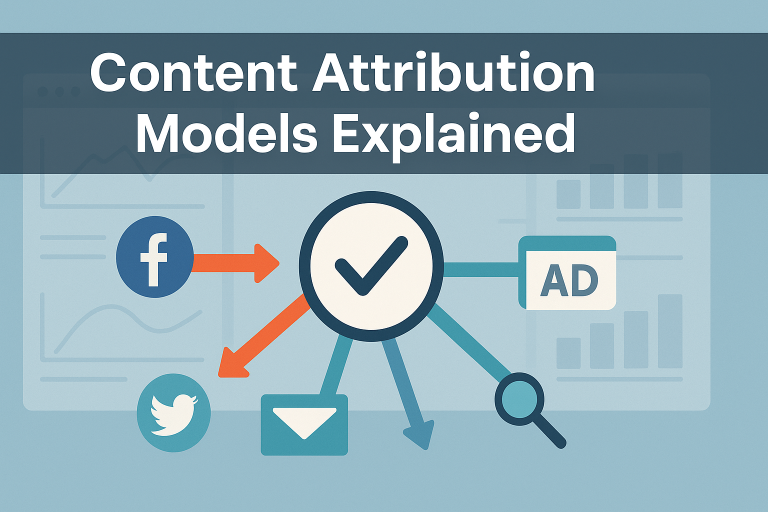
Select and implement an attribution model to distribute credit for conversions. Content attribution models explain how to assign conversion credit across multiple touchpoints. Common models include:
- First-touch: 100% credit to first content interaction
- Last-touch: 100% credit to final content before conversion
- Linear: Equal credit across all content touchpoints
- Position-based: Higher weight to first and last interactions
- Data-driven: Algorithm-based weighting using historical patterns
Step 4: Calculate ROI by Content Type
Apply this formula to each content category:
ROI = [(Revenue attributed to content – Content cost) / Content cost] × 100
Example: Blog content ROI calculation
- Monthly blog cost: $5,000
- Attributed revenue: $15,000
- ROI calculation: [($15,000 – $5,000) / $5,000] × 100 = 200%
Step 5: Consider Timeframe
Adjust calculations based on appropriate timeframes:
- Short-term ROI: 1-3 months (suitable for campaigns, emails)
- Medium-term ROI: 3-6 months (blog posts, videos)
- Long-term ROI: 6-24 months (comprehensive guides, research reports)
Step 6: Account for Lifetime Value
Incorporate customer lifetime value into calculations for more accurate long-term ROI:
Content ROI with CLV = [(CLV × New customers from content – Content cost) / Content cost] × 100
Business model differences significantly impact calculation approach. B2B companies with longer sales cycles should use pipeline influence metrics and multi-touch attribution, while B2C businesses can often rely on more direct conversion tracking.
Accurate calculation requires proper attribution, which presents its own unique challenges.
Content Attribution Models: Connecting Content to Conversions
One of the greatest challenges in measuring content marketing ROI is attribution. Connecting content touchpoints to eventual conversions requires understanding different attribution models and selecting the right approach for your business.
Common Attribution Models Compared
| Attribution Model | How It Works | Best For | Limitations |
| First-Touch | 100% credit to first content interaction | Awareness campaigns | Ignores later influences |
| Last-Touch | 100% credit to final touchpoint | Short sales cycles | Undervalues early content |
| Linear | Equal credit across all touchpoints | Simple multi-touch needs | Not weighted by impact |
| Position-Based | 40% to first, 40% to last, 20% to middle | Balanced attribution | Somewhat arbitrary weighting |
| Time-Decay | More credit to recent touchpoints | Longer sales cycles | Undervalues early research |
| Data-Driven | Algorithm determines credit based on patterns | Advanced measurement | Requires significant data |
A typical customer journey involves multiple content interactions before conversion. For example, a B2B software purchase might include:
- Reading a thought leadership blog post (awareness)
- Downloading an industry report (consideration)
- Watching a product demo video (evaluation)
- Reviewing a customer case study (decision)
With first-touch attribution, all credit goes to the blog post. With last-touch, the case study gets 100% credit. Neither accurately reflects the full customer journey.
Selecting the Right Attribution Model
Choose your attribution model based on:
- Sales cycle length: Longer cycles need multi-touch models
- Content diversity: More content types benefit from weighted models
- Available data: More historical data enables data-driven models
- Business model: B2B often needs position-based, B2C can use simpler models
Implementing attribution models requires the right technology stack, which we’ll explore next.
Essential Tools and Platforms for Measuring Content Marketing ROI
Effective measurement requires the right tools. From web analytics to content-specific platforms, here’s a comprehensive overview of the technology stack needed to track, calculate, and report your content marketing ROI.
Analytics Platforms
- Google Analytics 4: Free platform offering comprehensive audience, acquisition, and behavior data with enhanced event tracking.
- Adobe Analytics: Enterprise-level platform with advanced segmentation and attribution capabilities.
- Matomo: Privacy-focused alternative with full data ownership.
Implementation tip: Configure conversion events for all key actions (downloads, form submissions, purchases) and set up custom channel groupings for content.
CRM Integration
- Salesforce: Enterprise CRM with campaign influence tracking.
- HubSpot: Marketing automation with built-in content tools and attribution.
- Pipedrive: Simpler CRM option for smaller businesses.
Implementation tip: Create UTM parameter conventions to track content sources consistently and map them to CRM opportunity fields.
Content-Specific Tools
- SEMrush: Tracks organic content performance, keyword rankings, and competitive metrics.
- Ahrefs: Monitors backlinks, organic traffic value, and content performance.
- ContentSquare: Provides heatmaps and user behavior analytics on content pages.
Attribution Tools
- Attribution: Dedicated multi-touch attribution platform.
- Dreamdata: B2B-focused attribution connecting content to revenue.
- Ruler Analytics: Tracks customer journeys across multiple touchpoints.
Dashboard Creation
- Google Data Studio: Free visualization tool with multiple data source connections.
- Tableau: Enterprise-level data visualization platform.
- Databox: Simplified dashboard creation with templates.
Implementation by Budget Level
Small budget ($0-1,000/month):
- Google Analytics 4 + Google Search Console + Google Data Studio
- Basic CRM with manual tracking
- Free versions of SEO tools
Medium budget ($1,000-5,000/month):
- Google Analytics 4 + HubSpot + Ahrefs/SEMrush
- Basic attribution tool
- Simplified dashboard solution
Enterprise budget ($5,000+/month):
- Adobe Analytics + Salesforce + full SEO suite
- Dedicated attribution platform
- Advanced visualization tools
With tools in place, you need effective reporting to communicate results to stakeholders.
Creating Impactful ROI Reports for Different Stakeholders
Measuring ROI is only valuable if you can effectively communicate the results. Different stakeholders require different reporting approaches. Here’s how to create impactful ROI reports that resonate with each audience.
Executive Report Template
Focus on business impact with these elements:
- Top-line ROI percentage: Overall content marketing return
- Revenue contribution: Total attributed revenue
- YOY comparison: Performance vs. previous period
- Cost efficiency metrics: CAC and cost per lead trends
- Strategic recommendations: 2-3 key actions based on data
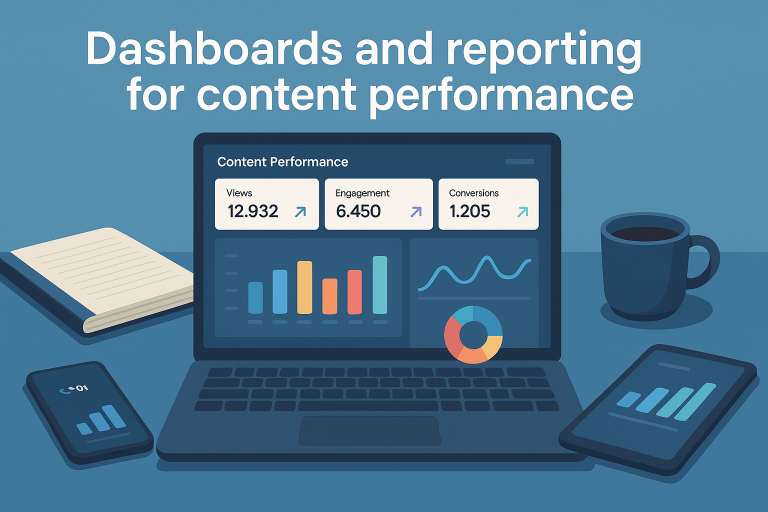
Format: Single-page dashboard with minimal text and clear visualizations
Marketing Team Report
Focus on optimization opportunities:
- Content performance by type: ROI breakdown by format
- Channel effectiveness: Distribution channel comparison
- Audience segment analysis: Conversion patterns by segment
- Content gap identification: Underperforming topic areas
- Tactical recommendations: Specific content optimizations
Format: Detailed dashboard with actionable insights for each content category
Finance Stakeholder Report
Focus on investment justification:
- Cost breakdown: Detailed content investment allocation
- Revenue attribution methodology: Clear explanation of calculation
- Pipeline influence: Content impact on sales pipeline
- Efficiency metrics: Cost per lead, cost per acquisition
- Budget utilization: Spending vs. forecasted allocation
Format: Spreadsheet-style report with detailed financial metrics
Visualization Best Practices
- Use consistent color coding for metrics categories
- Include trend lines rather than just point-in-time data
- Add benchmark comparisons when available
- Employ visual hierarchy to emphasize key metrics
- Include definitions for specialized metrics
Reporting Frequency Recommendations
- Executives: Quarterly summaries with monthly highlights
- Marketing teams: Monthly comprehensive reports with weekly highlights
- Finance: Quarterly detailed reports aligned with fiscal periods
I’ve found that using content funnel templates in reports helps stakeholders visualize how content drives prospects through the customer journey, making ROI reporting more intuitive.
Effective reporting identifies areas for improvement, leading us to ROI optimization strategies.
Optimizing Content Marketing ROI: Strategies for Continuous Improvement
Measuring ROI isn’t just about proving value. It’s about improving performance. Use these data-driven strategies to continuously optimize your content marketing ROI and maximize the impact of your investment.
Content Audit Methodology
Regularly assess your content portfolio using this framework:
- Analyze performance data: Gather metrics for all content pieces
- Classify content by ROI: Categorize as high, medium, or low performers
- Identify patterns: Determine common factors in high-ROI content
- Create optimization plan: Prioritize updates based on potential impact
Resource Reallocation Framework
Optimize your content investment allocation:
| Content Category | ROI Action |
| High ROI + High Traffic | Preserve and update regularly |
| High ROI + Low Traffic | Increase distribution investment |
| Low ROI + High Traffic | Optimize conversion elements |
| Low ROI + Low Traffic | Archive or completely revamp |
Content Repurposing for Improved ROI
Extract more value from existing assets using content funnel examples as templates for repurposing:
- Transform high-performing blog posts into downloadable guides
- Convert webinars into video series, blog posts, and social snippets
- Create industry-specific versions of general content
- Update older content with new data and examples
- Combine related pieces into comprehensive resources
A/B Testing Strategy
Systematically test content elements to improve performance:
- Headlines: Test variations for higher click-through rates
- CTAs: Experiment with placement, wording, and design
- Content formats: Compare long-form vs. short-form engagement
- Media elements: Test impact of videos, images, and interactive components
- Distribution timing: Analyze performance across different schedules
Distribution Channel Optimization
Refine your distribution strategy based on channel ROI:
- Calculate ROI for each distribution channel
- Increase investment in highest-performing channels
- Test new audience segments within profitable channels
- Reduce or eliminate low-performing channels
- Develop channel-specific content variations
Audience Segmentation for Improved Targeting
Create content specifically tailored to high-value segments:
- Analyze conversion rates by audience characteristics
- Identify highest-value customer segments
- Develop segment-specific content themes
- Create targeted distribution strategies
- Track segment-specific ROI metrics
Despite having a strong optimization framework, you’ll encounter measurement challenges that require solutions.
Overcoming Common Content Marketing ROI Measurement Challenges
Even with the right framework, tools, and strategies in place, measuring content marketing ROI presents unique challenges. Here’s how to address the most common obstacles to accurate measurement and reporting.
Challenge: Long Sales Cycles
Solutions:
- Implement micro-conversion tracking (content downloads, email signups)
- Use predictive modeling based on historical conversion patterns
- Apply value assignment to pipeline stages influenced by content
- Track content engagement patterns of closed deals retrospectively
Challenge: Multi-Channel Attribution Complexity
Solutions:
- Implement consistent UTM parameter conventions across channels
- Use customer ID tracking where possible for cross-device journeys
- Deploy data unification tools to connect touchpoints
- Start with simplified attribution model and gradually increase complexity
Challenge: Content Team Skill Gaps
Solutions:
- Develop simplified reporting templates for non-technical team members
- Create standardized measurement processes with clear documentation
- Provide targeted training on essential analytics tools
- Consider analytics specialists for complex measurement needs
Challenge: Data Quality Issues
Solutions:
- Implement regular data audits with quality checks
- Create standardized data collection procedures
- Use data validation rules in collection tools
- Document all measurement methodology changes
Challenge: Budget Constraints
Solutions:
- Start with free tools (Google Analytics, Google Data Studio)
- Focus measurement on highest-value content types first
- Use manual tracking for small-scale campaigns
- Leverage existing tools’ reporting capabilities
Challenge: Organizational Resistance
Solutions:
- Begin with simple metrics that directly connect to business goals
- Create educational resources explaining measurement methodology
- Demonstrate quick wins through pilot measurement programs
- Align reporting with stakeholders’ key performance indicators
As you address these challenges, keep an eye on emerging trends that will shape the future of content marketing ROI measurement.
Future of Content Marketing ROI: Emerging Trends and Considerations
As marketing technology evolves and privacy regulations change, content marketing ROI measurement continues to transform. Stay ahead of the curve by understanding these emerging trends and future considerations.
Privacy-First Measurement
With cookie deprecation and increasing privacy regulations, measurement strategies must adapt:
- First-party data focus: Develop direct audience relationships and data collection
- Cookieless tracking: Implement server-side tracking and privacy-preserving APIs
- Consent-based measurement: Create transparent data collection with clear value exchange
- Aggregate data modeling: Use statistical methods to analyze anonymized data sets
AI and Machine Learning Applications
Advanced technologies are transforming ROI measurement capabilities:
- Predictive content analytics: Forecast content performance before publication
- Automated attribution: Use AI to determine optimal credit distribution
- Content recommendation engines: Deliver highest-ROI content based on user signals
- Natural language processing: Analyze content quality correlation with performance
Integrated Marketing Measurement
Content marketing measurement is becoming part of unified marketing measurement:
- Cross-channel integration: Connect content performance with all marketing channels
- Marketing mix modeling: Determine content’s role in overall marketing effectiveness
- Brand and performance integration: Connect content to both immediate conversions and brand metrics
- Customer experience mapping: Track content’s role in full customer journey
Evolving Content Formats
New content types require adapted measurement approaches:
- Voice search content: Measure audio engagement and voice-initiated actions
- Interactive content: Track participation rates and completion metrics
- Video-first strategies: Develop sophisticated video engagement analytics
- AR/VR experiences: Measure immersive content engagement
In my work with dozens of brands, I’ve observed that companies who anticipate these changes and adapt their measurement strategies accordingly gain significant competitive advantage in their content ROI.
While the technical aspects of measurement will continue to evolve, the fundamental principles of connecting content to business outcomes remain constant.
Conclusion: Building a Culture of Content Marketing Measurement
Measuring content marketing ROI isn’t just a technical process. It’s a mindset that transforms how organizations approach content strategy and investment.
The most successful content marketing programs share these characteristics:
- Measurement integration: ROI analysis built into the content creation process, not added afterward
- Strategic alignment: Clear connection between content objectives and business goals
- Continuous optimization: Regular review and refinement based on performance data
- Cross-functional collaboration: Marketing, sales, and finance alignment on measurement
- Investment in capabilities: Appropriate tools and skills for your business context
Implementation roadmap based on your organization’s maturity level:
Beginning stage: Start with basic website analytics, track direct conversions, and focus on a few critical metrics aligned with business goals.
Intermediate stage: Implement multi-touch attribution, connect content to CRM data, develop regular reporting cadence, and start optimization processes.
Advanced stage: Deploy sophisticated attribution modeling, integrate all marketing channels, predict content performance, and align content investment with proven ROI patterns.
The strategic advantage of content marketing ROI measurement goes beyond justifying budgets. It transforms content from a cost center to a revenue driver, enables data-driven decision making, and creates sustainable competitive advantage through continuous improvement.
Begin by implementing the steps outlined in this guide, starting with clear goals and building your measurement framework progressively. The organizations that excel at content marketing ROI measurement don’t just produce better content. They build stronger businesses.