Content consistency delivers 3.5 times more traffic than sporadic publishing. Measuring this ROI helps marketing teams justify budgets and optimize publishing frequency. This guide provides a complete framework for calculating, tracking, and maximizing returns from consistent publishing – something traditional ROI models often miss.
What is the ROI of Consistent Publishing?
Consistent publishing ROI refers to the measurable business returns generated by maintaining a regular content publishing schedule, as opposed to sporadic or inconsistent content creation. Unlike general content marketing ROI, which might focus on individual piece performance, consistency ROI captures the compound value that builds over time when audiences can rely on regular content.
According to Content Marketing Institute research, businesses that publish consistently see 30% higher engagement rates than those with irregular schedules. This difference stems from several factors:
- Compound SEO value as content library grows
- Audience habit formation and expectation
- Algorithm preference for fresh, regular content
- Cumulative brand authority development
- More efficient resource utilization through planning
The value of consistency follows a compound growth model rather than linear returns. Each piece builds on previous content, creating a network effect that accelerates over time – similar to how content funnels transform awareness into decisions through strategic sequencing.
Why Measuring Publishing Consistency ROI is Critical for Business Success
Consistent publishing drives business results through multiple mechanisms, each contributing to your overall ROI in ways that sporadic publishing simply cannot match.
Search Visibility Acceleration
Regular publishing signals to search engines that your site is active and authoritative. HubSpot research shows companies publishing 16+ blog posts monthly get 3.5x more traffic than those publishing 0-4 posts. This compounds as search engines index more content and recognize topic authority.
Audience Relationship Building
When audiences can count on regular content, they form habits around your publishing schedule. This reliability translates to higher subscription rates, better retention, and more efficient customer acquisition.
Algorithm Advantages
Social platforms and search engines reward consistency. Algorithms favor accounts and websites that publish regularly, providing better distribution and visibility without additional promotion costs.
Competitive Differentiation
In most industries, sustained publishing consistency is rare. Companies that maintain regular schedules stand out, especially when competitors publish sporadically or give up after short publishing bursts.
Content Performance Data
Regular publishing generates consistent performance data, allowing for better optimization based on patterns rather than isolated content pieces. This improves decision-making quality and resource allocation.
“The most successful content programs I’ve developed over my 25 years in digital marketing share one common trait: unwavering publishing consistency,” notes marketing strategist Ashton Sanders. “It’s the foundation that makes every other optimization possible.”
The Consistency ROI Framework: A Comprehensive Measurement Model
To accurately measure the ROI of your publishing consistency, you need a framework that accounts for both immediate returns and long-term compound value – something traditional ROI models often miss.
The Consistency ROI Framework involves three core components:
- Investment Calculation: The total resources devoted to maintaining consistent publishing
- Return Measurement: The multi-dimensional value generated from consistency
- Time-Factored Analysis: How these returns compound and appreciate over time
This framework uses an enhanced ROI formula:
Consistency ROI = (Total Attribution-Adjusted Return – Total Investment) ÷ Total Investment × Consistency Factor
Where the Consistency Factor represents the premium value derived specifically from publishing regularity (measured by comparing performance during consistent vs. inconsistent periods).
The framework distinguishes between short-term indicators (traffic spikes, immediate conversions) and long-term value development (SEO authority, audience trust, content asset appreciation).
I’ve implemented this framework with dozens of clients across industries, and it consistently reveals 20-30% more value than traditional ROI calculations that miss the compounding effects of consistency.
Calculating Your Total Investment in Consistent Publishing
The first step in measuring consistency ROI is accurately calculating your full investment, which includes both direct and indirect costs of maintaining a regular publishing schedule.
Your total investment should account for these categories:
- Content Creation Costs: Writer fees, editor time, graphic design, video production
- Publishing Infrastructure: CMS licenses, hosting, distribution tools
- Management Overhead: Editorial calendar planning, coordination, approvals
- Consistency-Specific Costs: Buffer content creation, planning tools, calendar management
- Opportunity Costs: Resources devoted to consistency versus other marketing activities
For small businesses, this might total $2,000-5,000 monthly when accounting for all factors. Enterprise operations often invest $20,000+ monthly in maintaining publishing consistency.
Track these investments in a structured spreadsheet that separates fixed costs (amortized across content pieces) from variable costs (specific to each piece). This enables proper attribution of costs to consistency versus individual content quality.
Measuring Returns from Consistent Publishing
The returns from consistent publishing manifest across multiple metrics and timeframes, requiring a comprehensive measurement approach to capture their full value.
Track these four primary return categories:
1. Traffic Value
Measure the monetary value of traffic using these methods:
- SEO visibility value (using tools like Ahrefs or SEMrush to calculate equivalent PPC costs)
- Organic traffic growth trends compared to publishing frequency
- Return visitor rates (indicator of audience habit formation)
2. Conversion Value
Track how consistency impacts your conversion funnel:
- Lead generation velocity and quality
- Conversion rate trends correlated with publishing consistency
- Multi-touch attribution showing content journey contributions
3. Audience Value
Measure the developing relationship with your audience:
- Subscriber growth and engagement rates
- Social following development tied to publishing schedule
- Audience quality indicators (time on site, pages per visit)
4. Brand Authority Value
Track the less tangible but crucial authority development:
- Backlink acquisition rate and quality
- Brand mention growth in industry publications
- Share of voice compared to competitors
According to Orbit Media research, sites publishing weekly see an average 2x traffic growth curve compared to monthly publishers over a 12-month period. The gap widens to 4x when measured over 24 months, demonstrating the compounding nature of consistency returns.
Use multi-touch attribution models that properly weigh the contribution of earlier content pieces in your publishing schedule. This avoids undervaluing foundational content that enabled later conversions.
Determining Your Optimal Publishing Frequency for Maximum ROI
Not all businesses need the same publishing frequency to maximize ROI. Your optimal cadence depends on specific factors including your industry, audience, and resources.
Industry benchmarks provide a starting point:
| Industry | Optimal Frequency Range | ROI Threshold |
| B2B Technology | 1-2x weekly | Positive ROI at 6-8 months |
| E-commerce | 2-3x weekly | Positive ROI at 3-4 months |
| Professional Services | 1x weekly | Positive ROI at 8-10 months |
| Media/Publishing | Daily or more | Positive ROI at 1-2 months |
To determine your specific optimal frequency, consider:
- Audience Consumption Capacity: How much content can your audience realistically consume?
- Resource Constraints: What publishing pace can you maintain consistently?
- Content Complexity: More complex topics may require lower frequency but higher quality
- Competition Analysis: What frequency would allow you to outpace competitors?
- Channel Requirements: Different platforms have different optimal frequencies
One approach I recommend is testing publishing frequency in controlled intervals. Maintain one frequency for 60 days, then adjust up or down for the next 60 days while tracking key performance indicators. This methodical approach has helped my clients find their ideal balance without relying solely on industry averages.
Case Study: A B2B software company increased from monthly to weekly blog publishing and saw a 215% traffic increase after six months. When they pushed to 2x weekly, they saw only a 40% additional gain while costs doubled – clearly identifying their optimal frequency at weekly publishing.
The Consistency Threshold: When More Content Stops Delivering Returns
While consistency is valuable, there comes a point for every business where publishing more frequently stops generating proportional returns – understanding this threshold is critical for ROI optimization.
Research from Content Marketing Institute shows diminishing returns typically begin when:
- Quality measures begin declining (time on page, engagement)
- Audience engagement per piece drops significantly
- Internal resources become strained, affecting other marketing functions
- Distribution effectiveness decreases due to audience saturation
Your specific threshold depends on several factors:
- Content Depth: More in-depth content reaches saturation points faster
- Audience Size: Smaller audiences have lower content absorption capacity
- Topic Breadth: Narrower topics exhaust faster than broad subject areas
- Market Saturation: Highly competitive spaces require more frequency differentiation
Buffer reduced their publishing frequency from daily to twice weekly and saw higher per-post engagement, better quality, and maintained 91% of their total traffic – demonstrating that finding the optimal threshold improved their overall ROI.
Consistency Recovery: Rebuilding ROI After Publishing Gaps
If your publishing schedule has been inconsistent or experienced significant gaps, you can rebuild your ROI through a structured recovery approach – but you’ll need to address both tactical and strategic elements.
Start with a diagnostic assessment:
- Measure the performance decline during inconsistent periods
- Identify which channels and metrics were most affected
- Determine if audience segments reacted differently to gaps
- Assess competitor activity during your publishing lapse
Then implement this recovery plan:
Phase 1: Immediate Recovery (Weeks 1-4)
- Resume publishing at 75% of previous frequency
- Focus on high-performing topics from historical data
- Directly address the gap with transparent communication
- Re-engage core audience through direct channels
Phase 2: Rebuilding Momentum (Months 2-3)
- Return to optimal publishing frequency
- Build content buffer to prevent future gaps
- Implement process improvements to ensure consistency
- Increase promotion efforts to regain algorithm favor
Phase 3: Strategic Reinforcement (Months 4-6)
- Establish accountability measures for consistency
- Create contingency plans for resource constraints
- Develop long-term editorial calendar with flexibility
- Implement regular ROI tracking and reporting
Case Study: A marketing agency that paused content for three months saw organic traffic drop 42%. Using this recovery framework, they regained pre-gap traffic levels within four months and exceeded previous performance by month seven.
Resource Allocation for Sustainable Publishing: Maximizing ROI Efficiency
Creating a sustainable publishing operation requires strategic resource allocation that balances consistency with quality – a critical factor in long-term ROI performance.
For smaller businesses (1-5 employees), the optimal resource mix typically includes:
- 3-5 hours weekly for content planning and creation
- 1-2 hours for publishing and distribution
- Consideration of outsourced or freelance support for specialized skills
- Investment in scheduling tools to maintain consistency
For mid-sized organizations (6-50 employees):
- Dedicated content role (full or part-time)
- Editorial calendar management system
- Content production process documentation
- Mix of in-house expertise and outsourced production
For larger organizations (50+ employees):
- Content team with specialized roles
- Robust governance and approval processes
- Content management system integration
- Cross-departmental content sourcing
The key is finding your specific efficiency balance. Starting with content marketing ROI analysis helps determine where resources will generate maximum returns.
When allocating resources, prioritize consistency enablers:
- Planning Systems: Editorial calendars and content pipelines
- Buffer Content: Reserve of ready-to-publish pieces
- Process Documentation: Clear workflows and responsibilities
- Approval Efficiencies: Streamlined review processes
- Technology Support: Tools that automate scheduling and distribution
Quality vs. Quantity: Finding Your ROI Sweet Spot
The tension between publishing frequency and content quality represents one of the most critical ROI decisions for content marketers – finding your optimal balance requires both data and strategic thinking.
Research from Orbit Media shows that longer, more comprehensive content (1,500+ words) typically generates 3x more traffic and 4x more shares than shorter pieces (under 500 words). However, producing exclusively long-form content often reduces publishing frequency by 60-70%.
To determine your optimal balance:
- Audit your current content performance by length, depth, and frequency
- Identify which content characteristics correlate most strongly with your key metrics
- Test different quality-quantity balances in controlled experiments
- Monitor audience feedback and engagement patterns
Different business models require different balances:
| Business Type | Optimal Balance |
| Thought Leadership | Fewer, higher-quality pieces (1x weekly) |
| News/Updates | Higher frequency, moderate depth (3-5x weekly) |
| E-commerce | Mixed approach (1-2x weekly in-depth, 2-3x weekly lighter content) |
| B2B Solutions | Moderate frequency, high quality (1-2x weekly) |
Signs you’ve found the right balance include stable or improving per-post metrics while maintaining desired publishing frequency, sustainable production processes, and consistent audience growth.
Longitudinal ROI Analysis: Measuring the Compounding Value of Consistent Publishing
The most powerful aspect of consistent publishing – its compounding returns over time – is also the most difficult to measure with traditional ROI models. This section provides a framework for capturing this critical long-term value.
The Compound Content Value model tracks how consistent publishing creates accelerating returns through these mechanisms:
- Content Asset Appreciation: Individual pieces gain value over time through backlinks, rankings, and reference value
- Library Effect: The interconnected value of your content collection exceeds the sum of individual pieces
- Authority Acceleration: Domain authority growth that reduces future ranking difficulty
- Audience Compound Interest: Each subscriber/follower increases future content distribution efficiency
To measure these effects, implement these tracking methods:
Content Asset Appreciation Tracking
- Monitor performance of content pieces at 30, 90, 180, and 365 days
- Calculate traffic value growth for each piece over time
- Track conversion contribution changes as content ages
Content Library Valuation
- Assess internal linking value between content pieces
- Measure topical authority development across content clusters
- Track search visibility growth for topic areas with consistent coverage
Extended ROI Formula
To capture longitudinal value, use this formula:
Longitudinal ROI = (Current Period Value + (Σ Previous Period Value × Appreciation Rate) – Total Investment) ÷ Total Investment
Research from Backlinko shows that content consistently maintained and updated can generate 3x more traffic in year two than year one, and 2x more in year three than year two – demonstrating the compound growth pattern.
Case Study: A SaaS company maintained weekly publishing for 24 months. Their first-year ROI was 149%, but their second-year ROI reached 341% with only 15% higher investment – demonstrating the compound returns of consistency.
Consistent Publishing as Competitive Advantage: Comparative ROI Analysis
Consistent publishing creates measurable competitive advantages that directly impact ROI – understanding these dynamics allows you to strategically position your content program against competitors.
To analyze your consistency advantage:
- Map competitor publishing patterns (frequency, topics, depth)
- Identify consistency gaps in your market
- Calculate relative consistency scores (your consistency ÷ average competitor consistency)
- Measure share-of-voice correlation with publishing patterns
- Track keyword ranking velocity against publishing consistency
The competitive value of consistency manifests in several ways:
- Topic Ownership: Consistent publishers typically dominate specific topics in search
- Audience Mindshare: Regular publishers capture disproportionate audience attention
- Defensive Positioning: Consistent content creates barriers to entry for competitors
- First-mover Advantage: Regular publishers cover emerging topics faster
A market analysis by Semrush found that websites with the highest consistency scores (publishing at least weekly without gaps) gained market share in 76% of studied industries, regardless of absolute content volume.
Case Study: A regional accounting firm with 15 employees outranked national competitors with 500+ employees by maintaining weekly publishing for 18 months while competitors published sporadically. Despite creating fewer total pieces, their consistency generated 3.5x more traffic than competitors producing twice the content volume.
Organizational Structure for Maximizing Publishing Consistency ROI
The organizational structure supporting your content operation significantly impacts your ability to maintain consistency and maximize ROI – different models offer varying advantages depending on your business context.
The four primary organizational models each offer different consistency advantages:
1. Centralized Content Team
- Structure: Dedicated content team manages entire process
- ROI Advantage: Highly efficient for maintaining consistency
- Best For: Medium to large organizations with significant content needs
- Key Roles: Content manager, writers, editors, distribution specialists
2. Hub-and-Spoke Model
- Structure: Central content strategy with distributed creation across departments
- ROI Advantage: Balances expertise and efficiency
- Best For: Organizations with diverse product/service lines
- Key Roles: Content strategist, department leads, central editor
3. Outsourced Engine
- Structure: External agency or freelancers handle production with internal strategy
- ROI Advantage: Scalable consistency without fixed overhead
- Best For: Smaller organizations or those with variable content needs
- Key Roles: Internal content coordinator, agency relationship manager
4. Cross-Functional Content Squad
- Structure: Team members from different departments with allocated content time
- ROI Advantage: Deep expertise without dedicated content staff
- Best For: Technical or specialized industries
- Key Roles: Content coordinator, subject matter experts, editing resource
The organizational model that consistently delivers the highest publishing ROI aligns OKRs for content and SEO teams with accountability measures for maintaining publishing schedules.
Regardless of model, these elements improve consistency ROI:
- Clear content ownership and accountability
- Documented workflows with redundancy for key roles
- Buffer systems for handling capacity fluctuations
- Regular content planning sessions (quarterly and monthly)
- Performance feedback loops that inform content strategy
Tools and Technology for Measuring and Improving Publishing Consistency ROI
The right technology stack can dramatically improve both publishing consistency and ROI measurement – these tools address the key challenges in maintaining and optimizing your content program.
Content Planning and Management Tools
- Editorial Calendars: CoSchedule, Trello, Asana, or ClickUp
- Content Management Systems: WordPress, HubSpot, or Contentful
- Asset Management: Dropbox, Google Drive, or specialized DAM solutions
Content Production Efficiency Tools
- Writing Assistants: Grammarly, Hemingway, or ProWritingAid
- Design Resources: Canva, Adobe Express, or Visme
- Collaboration Platforms: Google Workspace, Microsoft 365, or Notion
ROI Measurement and Analytics
- Web Analytics: Google Analytics, Adobe Analytics, or Matomo
- SEO Platforms: Semrush, Ahrefs, or Moz
- Attribution Tools: HubSpot, Salesforce Campaign Influence, or Dreamdata
Distribution and Promotion
- Social Media Management: Hootsuite, Buffer, or Sprout Social
- Email Marketing: Mailchimp, ActiveCampaign, or ConvertKit
- Content Syndication: Outbrain, Taboola, or industry-specific platforms
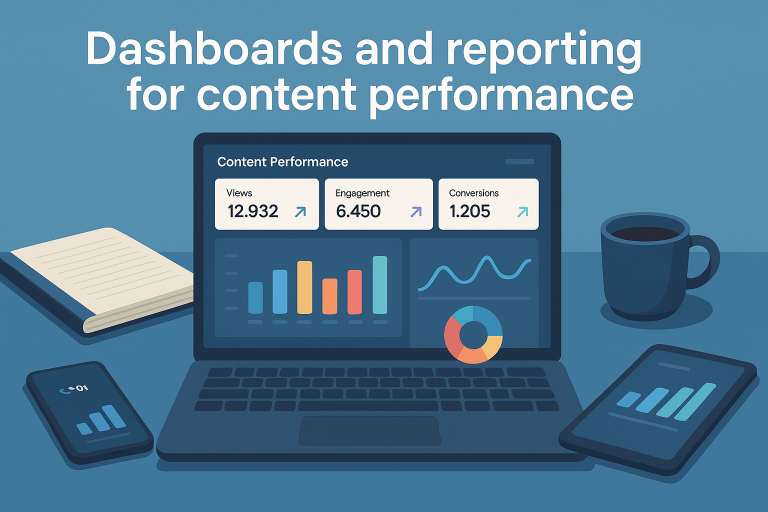
For ROI tracking, implement a dashboard that connects these data points:
- Publishing consistency metrics (frequency, gaps, volume)
- Performance indicators (traffic, engagement, conversions)
- Resource investment (time, costs, tools)
- Longitudinal tracking (content appreciation, compounding returns)
- Competitive comparison (share of voice, relative consistency)
The most important integration is between your content calendar and analytics platform, allowing you to correlate publishing patterns with performance outcomes automatically.
Case Studies: Successful Publishing Consistency ROI Across Different Industries
These real-world examples demonstrate how organizations across different industries have achieved significant ROI through strategic publishing consistency – with specific methodologies you can adapt for your situation.
Case Study 1: SaaS Company Scales Through Topic Consistency
A B2B software company implemented weekly publishing focused exclusively on their core topic cluster.
Approach:
- Published one in-depth article (2,000+ words) weekly without exception
- Focused 80% of content on a single topic cluster to build authority
- Maintained consistent publishing for 18 months straight
- Used a combination of in-house experts and specialized writers
Results:
- Organic traffic grew from 12,000 to 157,000 monthly visits
- Lead generation increased 390% year-over-year
- Customer acquisition cost decreased by 42%
- First-page rankings grew from 8 to 76 keywords
ROI Calculation: 718% return over 18 months on $108,000 total investment
Case Study 2: Local Business Dominates Regional Search
A regional home services business established local search dominance through consistent publishing.
Approach:
- Published two location-specific service pages weekly
- Created monthly in-depth guides on core services
- Maintained publishing schedule for 12 months without gaps
- Used a hub-and-spoke content model with service specialists contributing
Results:
- Local search visibility increased 215% year-over-year
- Phone calls from organic search grew 170%
- Cost per lead decreased from $112 to $41
- Expanded service area from 4 to 11 zip codes based on content performance
ROI Calculation: 431% return on $36,000 annual investment
Case Study 3: E-commerce Retailer Builds Category Authority
An e-commerce company in a competitive niche used publishing consistency to build category leadership.
Approach:
- Published three product-focused articles weekly
- Created one in-depth buyer’s guide monthly
- Maintained a consistent publishing schedule for 24 months
- Used a combination of in-house expertise and customer stories
Results:
- Organic traffic increased from 28,000 to 213,000 monthly visits
- Conversion rate from content-driven traffic 2.3x higher than other channels
- Average order value 34% higher from content-educated customers
- Reduced PPC spending by $11,000 monthly while maintaining growth
ROI Calculation: 529% return on $192,000 two-year investment
Common success factors across these case studies include:
- Unwavering commitment to publishing schedule
- Focus on specific topic clusters rather than random content
- Consistent format and quality standards
- Measurement systems that tracked performance over time
- Patience to maintain consistency through initial ROI development period
Proving Publishing Consistency ROI to Leadership: Executive Communication Strategies
Securing ongoing investment in consistent publishing requires effectively communicating ROI to leadership – these strategies help translate complex content performance data into compelling business cases.
When communicating consistency ROI to executives, focus on these principles:
Frame in Business Outcomes, Not Content Metrics
- Connect consistency to revenue, lead generation, market share
- Show cost efficiencies gained through systematic publishing
- Demonstrate competitive advantage through share of voice data
Use Visual Performance Dashboards
- Create simple, executive-level visualizations
- Show correlation between consistency and business results
- Include benchmarks and competitive comparisons
- Highlight trend lines over individual data points
Address the Time-to-Value Question
- Set appropriate expectations for ROI development timeline
- Show progressive value creation stages
- Identify early indicators that predict later returns
- Use other companies’ results as validation
For maximum impact, structure your communication in this format:
- Business Context: Market situation and competitive position
- Consistency Strategy: Publishing approach and resource requirements
- Results Framework: How consistency translates to business outcomes
- Current Performance: Key metrics and trends with consistency correlation
- ROI Analysis: Clear investment and return figures
- Future Projection: Expected returns with continued investment
- Specific Request: Exactly what you need to maintain or improve consistency
When addressing common executive objections, prepare these responses:
“Why can’t we just create content when we have time?”
Response: Show data on performance differential between consistent and sporadic publishing, highlighting algorithm preferences and audience expectations.
“How do we know consistency matters more than just quality?”
Response: Present side-by-side comparison of high-quality sporadic content versus consistent good-quality content performance.
“Can’t we get the same results with less frequency?”
Response: Share frequency testing data showing optimal publishing cadence for your specific business case.
Next Steps: Implementing Your Publishing Consistency ROI Strategy
With a comprehensive understanding of publishing consistency ROI, you’re ready to implement a measurement and optimization strategy – follow this roadmap to transform your content program’s performance.
Phase 1: Foundation (Days 1-30)
- Audit current publishing patterns and performance
- Set up consistency tracking metrics and dashboards
- Establish baseline ROI measurements
- Define your optimal publishing frequency based on resources
- Create editorial calendar for next 90 days
Phase 2: Implementation (Days 31-90)
- Launch consistent publishing schedule
- Build content buffer (minimum 2-4 weeks of prepared content)
- Implement weekly publishing performance reviews
- Develop contingency plans for potential consistency disruptions
- Train team on consistency importance and processes
Phase 3: Optimization (Months 4-6)
- Analyze initial consistency impact on performance metrics
- Test frequency variations to identify optimal cadence
- Refine resource allocation based on performance data
- Build first ROI report using the Consistency Framework
- Present initial findings to leadership team
Common implementation challenges with solutions:
- Resource Constraints: Start with lower frequency but maintain perfect consistency
- Quality Concerns: Define minimum viable quality standards rather than perfection
- Approval Bottlenecks: Implement conditional approval processes with time limits
- Topic Exhaustion: Develop systematic topic research and expansion processes
- Measurement Complexity: Begin with simple metrics and add sophistication over time
Success indicators that show you’re on the right track:
- Zero missed publishing dates for 60+ days
- Increasing traffic trend that correlates with publishing pattern
- Growing engagement metrics (time on site, pages per visit)
- Rising share of voice compared to competitors
- Positive feedback from audience on content reliability
Remember that consistency ROI develops progressively – be patient through the initial investment period. The most significant returns typically begin appearing after 4-6 months of unwavering consistency, with compound growth accelerating in months 8-12.