OKRs transform how content and SEO teams measure success and align their efforts with business goals. This framework provides clear direction, accountability, and measurable results unlike traditional goal-setting methods. In this guide, you’ll learn exactly how to create powerful OKRs specifically designed for content and SEO teams, with practical examples and implementation steps that will drive meaningful results across your digital marketing efforts.
What Are OKRs and Why Do They Matter for Content and SEO Teams?
Objectives and Key Results (OKRs) provide a framework for setting ambitious goals and tracking measurable outcomes. For content and SEO teams specifically, OKRs offer a powerful way to connect daily activities with strategic business priorities. This goal-setting methodology originated at Intel and was later popularized by Google and venture capitalist John Doerr.
The OKR framework consists of two main components:
- Objectives: Qualitative, ambitious goals that define what you want to achieve
- Key Results: Quantitative metrics that measure progress toward the objective
Unlike other goal-setting approaches, OKRs are specifically designed to push teams beyond their comfort zones. According to research by Betterworks, companies using OKRs report 38% higher employee engagement and 22% better performance outcomes compared to those using traditional goal management.
For content and SEO teams, OKRs provide specific advantages:
- Clear alignment between content creation and search visibility
- Measurable outcomes that go beyond vanity metrics
- Increased focus on high-impact activities
- Better cross-team collaboration
- Transparent progress tracking
When implemented correctly, OKRs bridge the gap between strategic business goals and tactical content and SEO work, ensuring every blog post, keyword optimization, and technical fix contributes to meaningful business outcomes.
How OKRs Differ from Traditional Goal-Setting Methods
Before diving into OKR creation, it’s important to understand how they differ from traditional goals and KPIs that content and SEO teams typically use.
| Traditional Goals | OKRs |
| Often siloed by department | Cross-functional by design |
| Usually achievable (100%) | Intentionally stretching (70% achievement ideal) |
| Activity-focused (publish 8 blog posts) | Outcome-focused (increase organic conversions by 30%) |
| Annual planning cycles | Quarterly cadence with regular check-ins |
| Often disconnected from strategy | Directly aligned with company objectives |
Traditional content metrics like “increase blog traffic by 10%” or “publish 4 articles per month” focus on activities or shallow outcomes rather than business impact. OKRs push teams to connect their work to meaningful results like revenue growth, customer acquisition, or market share gains.
As Andy Grove, former Intel CEO and early OKR advocate, explained: “The key result has to be measurable. But at the end you can look, and without any arguments, say, ‘Did I do that or did I not do it?’ Yes? No? Simple.”
The Integrated OKR Framework for Content and SEO Teams
Rather than treating content and SEO OKRs as separate initiatives, this integrated framework recognizes how these functions naturally support each other. After implementing this approach with dozens of marketing teams, I’ve seen firsthand how breaking down silos between content creators and SEO specialists leads to dramatically better results.
The integrated framework has four core components:
- Business alignment: Connecting content and SEO efforts to company objectives
- Shared objectives: Creating goals that both teams contribute to
- Complementary key results: Defining metrics that measure both content quality and search performance
- Unified tracking: Monitoring progress through a single dashboard
This approach addresses the common disconnect where content teams focus solely on production and engagement while SEO teams prioritize technical factors and rankings. The reality is that these functions achieve their best results when working in harmony.
For example, rather than separate objectives like “Improve blog engagement” (content team) and “Increase organic traffic” (SEO team), an integrated objective might be “Establish our blog as the leading industry resource,” with key results spanning both engagement metrics and search visibility.
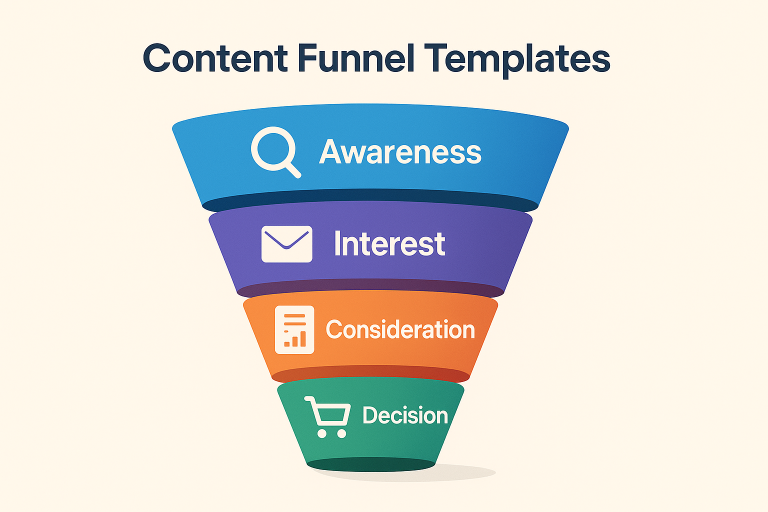
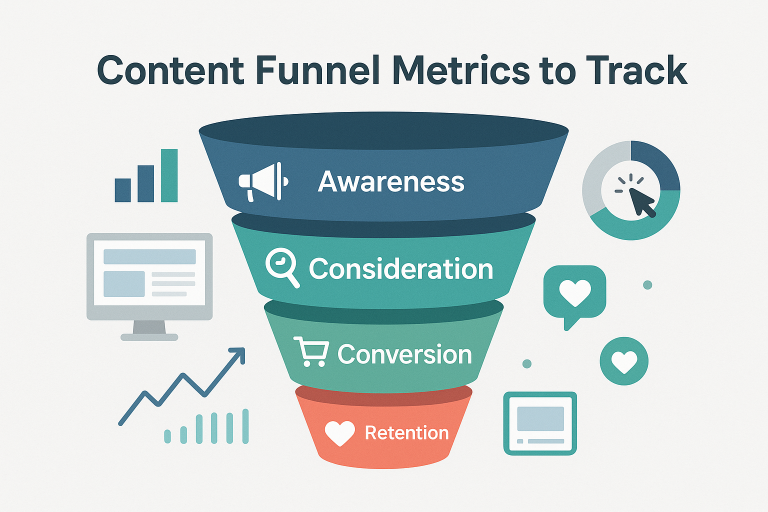
This integration is crucial for developing effective content funnels that guide users from awareness to decision, as both teams work together to create and optimize content for each stage of the buyer’s journey.
Types of Objectives for Content and SEO Teams
Effective objectives for content and SEO teams generally fall into four categories, each serving different aspects of your digital strategy.
1. Visibility Objectives
These objectives focus on expanding your content’s reach and searchability. Examples include:
- “Establish our blog as the go-to resource for [industry topic]”
- “Dominate search results for our core service categories”
- “Expand our content footprint across high-intent keywords”
2. Engagement Objectives
These objectives concentrate on deepening audience interaction with your content. Examples include:
- “Transform our content into a lead-generation engine”
- “Build an engaged community around our content”
- “Increase content stickiness and return readership”
3. Conversion Objectives
These objectives connect content and SEO efforts directly to business outcomes. Examples include:
- “Turn our educational content into a sales acceleration tool”
- “Make organic search our top customer acquisition channel”
- “Increase revenue from content-influenced purchases”
4. Authority Objectives
These objectives focus on establishing expertise and credibility. Examples include:
- “Position our team as thought leaders in [industry vertical]”
- “Build a backlink profile that outpaces our top competitors”
- “Strengthen our E-E-A-T signals across all content”
The most effective OKR strategies balance objectives across these categories rather than focusing solely on one area. This ensures your content and SEO efforts drive both short-term results and long-term strategic advantages.
Key Result Metrics for Content and SEO Teams
Selecting the right metrics for your key results is crucial. Here are the most effective metrics to track for content and SEO teams, organized by objective type.
Visibility Metrics
- Organic visibility score: Percentage of target keywords ranking in top 10 positions
- SERP feature capture rate: Number of featured snippets, knowledge panels, and other SERP features owned
- Content gap closure: Percentage reduction in keyword gaps vs. competitors
- Indexation efficiency: Ratio of indexed pages to published pages
- Mobile visibility: Mobile vs. desktop ranking differentials
Engagement Metrics
- Content depth engagement: Average scroll depth and time on page
- Return visitor rate: Percentage of readers who consume multiple content pieces
- Content interaction rate: Percentage of visitors who comment, share, or click internal links
- Topic authority score: Engagement metrics for topic clusters vs. individual articles
- Content satisfaction score: Based on feedback mechanisms and surveys
Conversion Metrics
- Content attribution revenue: Revenue attributed to content touchpoints
- Organic conversion rate: Percentage of organic visitors who convert
- SEO-qualified leads: Leads generated from organic search
- Content-influenced pipeline: Sales opportunities where content played a role
- Search-to-sale velocity: Time from first organic visit to purchase
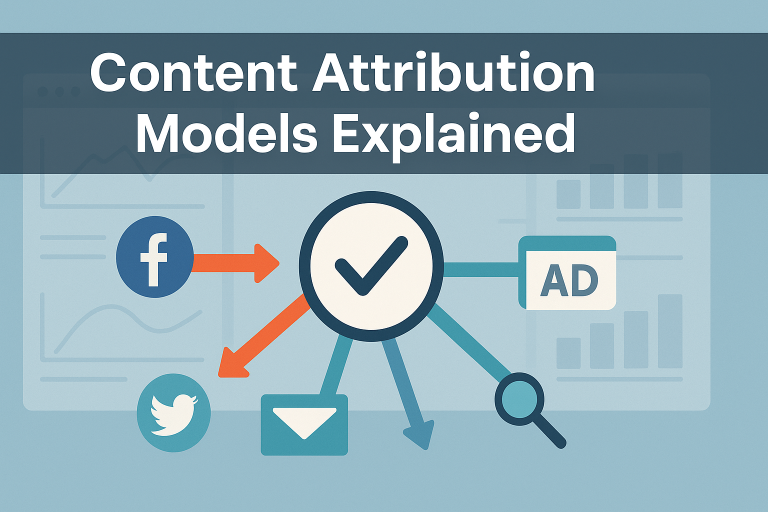
These advanced metrics go beyond traditional pageviews or rankings to measure the true business impact of your content and SEO efforts. Understanding content attribution models is particularly important for accurately measuring how your content influences conversions across the customer journey.
Authority Metrics
- Backlink quality score: Weighted measure of backlink profile strength
- E-E-A-T signals: Author expertise indicators, content accuracy measures
- Share of voice: Brand mentions relative to competitors
- Content freshness score: Percentage of content updated within target timeframe
- Topic depth coverage: Comprehensiveness of topic coverage vs. competitors
Step-by-Step Process to Create Integrated Content and SEO OKRs
Follow this 7-step process to create OKRs that align your content and SEO efforts while driving meaningful business results.
Step 1: Align with Business Objectives
Start by understanding your organization’s top-level goals for the quarter or year. This might include targets around revenue growth, customer acquisition, product launches, or market expansion. Interview leadership to understand:
- Primary business goals for the period
- Key initiatives that need content and SEO support
- Target markets or segments to prioritize
- Product or service priorities
Example: If your company’s goal is to increase enterprise customer acquisition by 40%, your content and SEO OKRs should support this by focusing on enterprise-relevant topics, keywords, and conversion paths.
Step 2: Conduct Content and SEO Performance Audit
Before setting new OKRs, assess your current performance to identify strengths, weaknesses, and opportunities:
- Analyze top-performing content by traffic, engagement, and conversions
- Identify content gaps compared to competitors
- Evaluate keyword rankings and search visibility trends
- Review technical SEO issues impacting performance
- Assess content distribution and promotion effectiveness
This audit will reveal where your biggest opportunities lie and inform realistic yet ambitious target setting.
Step 3: Identify 2-3 Primary Objectives
Based on business goals and your performance audit, select 2-3 primary objectives. Resist the temptation to chase too many objectives simultaneously. Effective objectives should be:
- Ambitious yet achievable
- Aligned with business priorities
- Clearly beneficial to both content and SEO efforts
- Specific enough to guide action
- Inspiring for team members
Example objective: “Transform our resource center into the industry’s most valuable knowledge hub.”
Step 4: Define 3-5 Key Results per Objective
For each objective, define 3-5 measurable key results that will indicate success. Each key result should:
- Be quantifiable with a specific metric
- Have a clear target number
- Include a deadline
- Be challenging but possible
- Represent outcomes, not activities
Example key results for the resource center objective:
- Increase resource center organic traffic by 80% (from 50K to 90K monthly visits)
- Achieve top 3 rankings for 25 high-intent industry keywords (from 8 currently)
- Grow resource center conversion rate from 2.1% to 3.5%
- Increase average engagement time from 2:05 to 3:30 per session
Step 5: Validate with Stakeholders
Before finalizing your OKRs, validate them with key stakeholders, including:
- Executive sponsors
- Sales leaders
- Product marketing
- Customer success teams
- The content and SEO teams themselves
This validation ensures your OKRs support broader company goals and have buy-in from all relevant parties.
Step 6: Implement Tracking Mechanisms
Establish systems to track progress on your key results. This might include:
- Custom dashboards in Google Analytics or Data Studio
- Weekly reporting templates
- Integration with OKR tracking software
- Automated alerts for significant changes
The best tracking systems make progress visible to everyone on the team and update automatically rather than requiring manual data entry.
Step 7: Establish Review Cadence
Set a regular schedule to review OKR progress:
- Weekly quick checks (15-30 minutes)
- Monthly deep dives (60-90 minutes)
- Quarterly retrospectives and planning (half-day)
These reviews should focus on progress, obstacles, and necessary adjustments rather than just status updates.
By following this process, you’ll create OKRs that truly drive integrated content and SEO performance. The key is maintaining focus on outcomes that matter to the business while giving teams flexibility in how they achieve those outcomes.
Implementation Timeline and Cadence
Successful OKR implementation follows a specific timeline. Here’s how to roll out and manage your content and SEO OKRs throughout the year.
Quarterly OKR Cycle
- Weeks 1-2 before quarter: OKR planning and finalization
- Week 1 of quarter: OKR kickoff and alignment
- Weeks 2-12: Execution and weekly check-ins
- Week 13: End-of-quarter review and scoring
Weekly Management Rhythm
Maintain momentum with consistent check-ins:
- Monday: Quick team standup to align on weekly priorities
- Wednesday: Mid-week blocker removal session
- Friday: Progress review and update OKR tracking
For quarterly OKRs to succeed, you need proper budgeting for content systems that support your goals, ensuring resources are allocated to your highest-priority initiatives.
Annual Strategic OKRs
While quarterly OKRs focus on tactical execution, consider setting annual strategic OKRs that:
- Guide your overall content and SEO direction
- Connect to long-term business strategy
- Inform quarterly OKR setting
- Address fundamental capability building
These annual OKRs typically focus on major initiatives like content technology improvements, audience expansion, or authority building that require sustained effort beyond a single quarter.
15 Practical OKR Examples for Different Content and SEO Team Structures
These real-world OKR examples are adapted for different team structures and business contexts. Each example includes objectives, key results, and notes on implementation.
For Small Teams (1-2 People)
Example 1: Traffic Growth Focus
Objective: Establish our blog as the go-to resource for small business accounting tips
Key Results:
- Increase organic traffic to the blog by 50% (from 15K to 22.5K monthly visits)
- Rank in top 5 positions for 15 high-intent “small business accounting” keywords (from 3 currently)
- Improve average session duration from 1:45 to 2:30
- Generate 300 newsletter subscribers from blog content (from 120 currently)
Example 2: Conversion Optimization Focus
Objective: Transform our content into our most effective lead generation channel
Key Results:
- Increase content-driven leads by 70% (from 50 to 85 per month)
- Improve conversion rate on SEO landing pages from 1.8% to 3.2%
- Reduce cost-per-lead from content by 40% (from $45 to $27)
- Create conversion paths for 5 high-traffic but under-monetized content topics
For Medium Teams (3-6 People)
Example 3: Content Authority Building
Objective: Position our team as the definitive thought leaders in marketing automation
Key Results:
- Secure 25 high-quality backlinks from industry publications (from 8 last quarter)
- Increase organic share of voice from 12% to 20% for our target keyword clusters
- Achieve featured snippet ownership for 30 high-value queries (from 11 currently)
- Grow newsletter audience by 1,000 subscribers through original research content
- Generate 15 speaking opportunities or guest contributions from our content
Example 4: Technical SEO Enhancement
Objective: Create the most technically optimized content experience in our industry
Key Results:
- Improve Core Web Vitals scores to “Good” threshold on 100% of content pages (from 65%)
- Reduce average page load time from 3.2 seconds to under 1.8 seconds
- Implement structured data on 250 high-priority content pages (from 80 currently)
- Achieve 100% mobile-friendly score across all content
- Increase crawl efficiency by reducing total crawl budget consumption by 30%
For Enterprise Teams (7+ People)
Example 5: Cross-Channel Content Integration
Objective: Create a seamless, integrated content experience across all customer touchpoints
Key Results:
- Increase cross-channel content engagement by 60% (measured by multi-touchpoint interactions)
- Reduce content journey abandonment rate from 72% to 45%
- Improve content personalization accuracy from 35% to 70% (measured by engagement lift)
- Increase search-to-social content amplification by 85%
- Generate 500 product-qualified leads through integrated content journeys
Example 6: International SEO Expansion
Objective: Establish market-leading organic presence in 3 new international markets
Key Results:
- Achieve top 5 rankings for 50 priority keywords in each target market
- Generate 75,000 monthly organic sessions from new markets (from 12,000 currently)
- Improve international conversion rate from 0.8% to 2.5%
- Secure 40 region-specific backlinks from local authority sites
- Reduce international bounce rate from 78% to 45% through localization improvements
For B2B Companies
Example 7: Sales Enablement Focus
Objective: Make our content the most valuable sales acceleration tool
Key Results:
- Increase sales team content utilization by 120% (measured through CRM tracking)
- Reduce average sales cycle from 72 days to 58 days for leads engaging with 3+ content pieces
- Improve late-stage conversion rate from 22% to 35% with decision-stage content
- Generate $2.5M in content-influenced pipeline (from $900K last quarter)
- Achieve 90% positive feedback from sales on content usefulness (from 45% currently)
For E-commerce Companies
Example 8: Product-Led Content Strategy
Objective: Drive category growth through best-in-class product content
Key Results:
- Increase organic traffic to product category pages by 85% (from 125K to 230K monthly)
- Improve product page conversion rate from 2.2% to 3.8% through enhanced content
- Reduce product return rate from 18% to 11% through better buying guidance content
- Capture featured snippets for 40 high-purchase-intent queries (from 12 currently)
- Increase average order value by 25% (from $67 to $84) for visitors engaging with buying guides
For SaaS Companies
Example 9: Product Adoption Content
Objective: Accelerate product adoption and reduce churn through educational content
Key Results:
- Increase feature adoption rate by 40% for users engaging with product education content
- Reduce time-to-value from 32 days to 18 days through onboarding content optimization
- Decrease support ticket volume by 35% through improved self-service content
- Increase NPS by 15 points for customers engaging with advanced usage content
- Reduce churn by 25% for users consuming 3+ educational content pieces monthly
Adapting OKRs for Specialized Content Types
Content teams often work with diverse formats beyond traditional blog content. Here’s how to adapt your OKRs for specialized content types.
Video Content OKRs
Objective: Make our YouTube channel the industry’s most valuable educational resource
Key Results:
- Increase watch time by 150% (from 50K to 125K minutes monthly)
- Grow subscriber base from 5,200 to 12,000
- Achieve 35% completion rate on all tutorial videos (from 22% currently)
- Rank in YouTube top 3 results for 25 high-value industry keywords
- Generate 300 qualified leads directly from video content
SEO Integration: Optimize video descriptions with target keywords, create companion blog posts for each video, and use structured data to earn video rich results in search.
Podcast Content OKRs
Objective: Establish our podcast as the premier thought leadership channel in our industry
Key Results:
- Grow monthly listeners from 3,500 to 10,000
- Increase average consumption from 65% to 85% of episode length
- Generate 50 qualified opportunities from podcast listeners
- Secure 20 industry leaders as guests
- Achieve 400 new email subscribers through podcast lead magnets
SEO Integration: Create SEO-optimized show notes pages, develop topic clusters around podcast themes, and repurpose audio content into written formats that can rank in search.
Tracking and Measuring OKR Progress
Consistent tracking is the key to OKR success. Here’s how to effectively measure progress on your content and SEO OKRs.
Essential Tracking Framework
Implement a three-layer tracking system:
- Weekly pulse checks: Quick metrics review to spot trends and issues
- Monthly deep dives: Comprehensive analysis of all key results
- Quarterly retrospectives: Full OKR scoring and learning capture
The most effective tracking combines automated data collection with human analysis and context.
Recommended Tracking Tools
Based on team size and needs, consider these tracking options:
- For small teams: Google Sheets with API connections to Google Analytics and Search Console
- For medium teams: Dedicated OKR software like Ally.io, Perdoo, or 15Five
- For enterprise teams: Integrated solutions like Workboard or BetterWorks with custom API connections
Whatever system you choose, ensure it provides:
- Visual progress indicators (like confidence scores or percentages)
- Historical tracking to show trends
- Notification capabilities for milestones or issues
- Accessible dashboards for all stakeholders
The strongest content marketing strategies incorporate content marketing ROI measurements that improve rankings by aligning your content investments with the metrics that matter most for search performance.
OKR Scoring and Evaluation Methods
Proper evaluation of OKR performance provides vital feedback for future planning. Here’s how to score and evaluate your content and SEO OKRs.
The 0-1.0 Scoring System
Use this straightforward scoring approach:
- 0.0-0.3: Well below target (significant shortfall)
- 0.4-0.6: Approaching target (progress made but fell short)
- 0.7-0.9: Target achieved (ideal range for ambitious OKRs)
- 1.0: Target exceeded (may indicate OKR wasn’t ambitious enough)
Following Google’s approach, aim for a 0.7 score on truly ambitious OKRs. Consistently scoring 1.0 suggests your targets aren’t stretching the team enough.
Scoring Example
Objective: Transform our blog into a lead generation engine
Key Results and Scores:
- Increase blog conversion rate from 1.8% to 3.2%
Actual result: 2.7% = Score of 0.6 - Generate 500 MQLs from blog content
Actual result: 425 MQLs = Score of 0.85 - Reduce cost per lead from $45 to $27
Actual result: $29 = Score of 0.9
Overall objective score: (0.6 + 0.85 + 0.9) ÷ 3 = 0.78
This overall score of 0.78 indicates successful achievement of an ambitious objective, with room for learning and improvement.
Troubleshooting Common Content and SEO OKR Challenges
Even well-designed OKRs face implementation challenges. Here are solutions to the most common problems content and SEO teams encounter.
Challenge 1: Too Many Objectives Diluting Focus
Signs: Team seems scattered, progress is slow across all fronts, team members struggle to articulate priorities
Solution: Ruthlessly prioritize to no more than 2-3 objectives per quarter. If you have more than this, either combine related objectives or defer some to future quarters. Remember that fewer objectives with strong progress beats many objectives with minimal progress.
Challenge 2: Key Results That Aren’t Measurable
Signs: Difficulty reporting progress, subjective debates about achievement, inability to track in real-time
Solution: Revise vague key results to include specific metrics, clear targets, and established measurement methods. For example, change “Improve blog content quality” to “Increase average engagement time on blog posts from 2:05 to 3:30.”
Challenge 3: Misalignment with Other Department OKRs
Signs: Conflicting priorities, resource competitions, lack of support from other teams
Solution: Conduct an alignment workshop with all department heads to identify interdependencies and ensure complementary objectives. Create shared OKRs that multiple departments contribute to for critical business initiatives.
Challenge 4: Algorithm Updates Disrupting Progress
Signs: Sudden ranking drops, traffic fluctuations unrelated to your content efforts
Solution: Build algorithm resilience into your OKRs by focusing on user experience metrics alongside ranking factors. Include key results that measure engagement, content comprehensiveness, and user satisfaction, which tend to remain stable through algorithm changes.
Challenge 5: Difficulty Measuring Quality Aspects of Content
Signs: Over-reliance on quantity metrics, inability to track content effectiveness
Solution: Implement proxy metrics for quality, such as:
- Engagement time compared to topic benchmarks
- Scroll depth percentages
- Reader feedback scores
- Return visitor rates
- Social sharing metrics
Challenge 6: Team Resistance to OKR Adoption
Signs: Minimal engagement in OKR discussions, treating OKRs as a checkbox exercise, continuing to work on non-OKR priorities
Solution: Involve the team in OKR creation rather than imposing goals from above. Conduct OKR co-creation workshops where team members contribute to defining objectives and key results. Also, ensure OKRs connect to meaningful work rather than feeling like an administrative burden.
Case Studies: Content and SEO Teams Succeeding with OKRs
These real-world examples demonstrate how content and SEO teams have used the integrated OKR framework to achieve significant results.
Case Study 1: SaaS Company Content Transformation
Initial Challenge: A mid-sized SaaS company with 800 indexed blog posts was struggling with stagnant organic traffic and poor conversion rates despite consistent publishing.
OKR Implementation:
Objective: Transform our content from quantity-focused to a conversion-optimized resource center
Key Results:
- Increase content conversion rate from 0.8% to 2.5%
- Improve average engagement time from 1:42 to 3:00
- Increase organic traffic to decision-stage content by 120%
- Generate 350 sales-qualified leads from content (from 85 previous quarter)
Implementation Process:
- Conducted content audit to identify high-potential pages
- Improved 25 high-traffic, low-conversion pages with better CTAs
- Created topic clusters around highest-converting themes
- Implemented progressive profiling to better qualify leads
- Built lead-nurturing workflows specific to content topics
Results:
- Content conversion rate reached 2.9% (exceeding target)
- Average engagement time increased to 2:47 (nearly hit target)
- Organic traffic to decision-stage content grew by 165%
- Generated 405 sales-qualified leads (exceeded target)
- Content-influenced revenue increased by 218%
Key Lesson: “We realized we didn’t need more content—we needed better content,” said the Content Marketing Director. “The OKR framework forced us to focus on outcomes rather than output, completely changing how we approached content creation.”
Case Study 2: E-commerce SEO Transformation
Initial Challenge: An e-commerce retailer was losing ground to competitors in organic search despite having more product pages indexed.
OKR Implementation:
Objective: Establish category dominance through best-in-class product content experience
Key Results:
- Improve category page rankings from average position 8.3 to 4.0 for target keywords
- Increase organic conversion rate from 1.2% to 2.8%
- Grow organic revenue by 75% (from $320K to $560K monthly)
- Reduce bounce rate on product pages from 72% to 45%
Implementation Process:
- Restructured category taxonomy based on search demand
- Enhanced product page content with buying guides and comparison tables
- Implemented structured data for all product pages
- Created question-based content addressing common purchase obstacles
- Improved mobile page experience through Core Web Vitals optimization
Results:
- Category page rankings improved to average position 3.2 (exceeded target)
- Organic conversion rate reached 3.1% (exceeded target)
- Organic revenue grew by 104% to $652K monthly (exceeded target)
- Product page bounce rate reduced to 48% (nearly hit target)
Key Lesson: “Setting OKRs forced us to prioritize high-impact pages rather than trying to optimize everything at once,” explained the SEO Manager. “By focusing on user experience metrics alongside traditional SEO factors, we not only improved rankings but dramatically increased conversions.”
Future Trends in Content and SEO OKRs
As search algorithms and content consumption habits evolve, so too will OKRs for content and SEO teams. Here are the emerging trends to prepare for.
1. AI Content Evaluation Metrics
As AI content generation becomes mainstream, teams will need new OKR metrics to measure human-AI collaboration effectiveness. Look for emerging metrics around:
- AI-assisted content performance vs. traditional content
- Unique insight measurements
- Content authenticity signals
- Human editorial value-add measurements
2. User Journey Mapping in OKRs
Rather than measuring isolated content pieces, advanced teams are creating OKRs around complete user journeys:
- Journey completion rates across content pieces
- Cross-format engagement metrics
- Multi-touch attribution modeling
- Intent-to-consumption alignment measurements
3. E-E-A-T Measurement Evolution
As search engines get better at evaluating Experience, Expertise, Authoritativeness, and Trustworthiness, content teams will develop more sophisticated OKRs around:
- Author expertise signaling
- Content accuracy scoring
- Citation and reference quality
- Transparent methodology documentation
4. Zero-Click Search Adaptation
With more searches resolved directly in SERPs without clicks, teams will create OKRs focused on:
- Featured snippet capture rates
- Brand impression metrics from SERP features
- Secondary action tracking (calls, directions, etc.)
- Zero-click to eventual conversion correlations
5. Cross-Channel Content Performance
As content distribution fragments across platforms, forward-thinking teams will develop OKRs measuring:
- Content reuse efficiency across channels
- Format-optimized performance variations
- Channel-to-channel attribution models
- Unified engagement scoring across platforms
To stay ahead, begin experimenting with these metrics in your OKR planning sessions, even if just as supplementary measures to your core key results.
Conclusion: Getting Started with Your Content and SEO OKRs
Implementing effective OKRs for your content and SEO teams requires careful planning, but the performance benefits make it worthwhile. Here’s how to get started today.
Begin with this simple three-step process:
- Audit your current performance to establish baselines and identify opportunities
- Identify one high-impact objective that aligns content and SEO efforts with business goals
- Define 3-4 measurable key results that will indicate meaningful progress
Remember that OKRs work best when they focus your team on outcomes rather than activities. The most powerful content and SEO OKRs connect daily work to meaningful business results, whether that’s revenue growth, customer acquisition, or market leadership.
Start small, iterate often, and use each quarter’s learnings to refine your approach. The OKR framework is designed to evolve alongside your team’s capabilities and your organization’s goals.
By implementing integrated OKRs for your content and SEO teams, you’ll not only improve performance metrics but also strengthen alignment, increase motivation, and create a clearer connection between content efforts and business success.