Attribution models are frameworks that determine how credit for conversions is assigned to marketing touchpoints. Understanding these models helps marketers make informed budget decisions and measure campaign effectiveness. This guide will explain different attribution models, help you select the right one for your business, and provide implementation steps while addressing privacy challenges and future trends.
What Are Attribution Models? Definition and Core Concepts
Attribution models are frameworks that determine how credit for sales and conversions is assigned to touchpoints in the customer journey. Understanding these models is essential for accurately measuring marketing effectiveness and making informed budget decisions.
In digital marketing, a touchpoint is any interaction between a potential customer and your brand. These interactions can include website visits, social media engagement, email opens, ad clicks, and many others. The customer journey refers to the complete path a person takes from first becoming aware of your brand to making a purchase.
Attribution modeling evolved from simple last-click models in the early days of digital marketing to today’s sophisticated multi-touch approaches. This evolution reflects the growing complexity of customer journeys and the need for more accurate measurement.
For example, consider a scenario where a customer first discovers your product through a Facebook ad, later searches for your brand on Google, receives an email, and finally makes a purchase after clicking on a retargeting ad. Without proper attribution, you might incorrectly assign all the credit to just one of these touchpoints.
Attribution matters because it directly impacts how you allocate your marketing budget. With accurate attribution, you can identify which channels and campaigns truly drive results and adjust your spending accordingly.
Types of Attribution Models: Single-Touch vs. Multi-Touch Approaches
Attribution models fall into two main categories: single-touch and multi-touch. Each category contains several specific models with distinct approaches to assigning conversion credit.
Single-touch models assign 100% of the credit to one touchpoint, while multi-touch models distribute credit across multiple touchpoints in the customer journey. According to research by Gartner, over 70% of marketing organizations now use some form of multi-touch attribution, though implementation sophistication varies widely.
| Attribution Model | Description | Pros | Cons | Best For |
|---|---|---|---|---|
| First-Touch | Gives 100% credit to the first interaction | Simple, focuses on acquisition | Ignores all subsequent interactions | Brand awareness campaigns |
| Last-Touch | Gives 100% credit to the final interaction | Simple, easy to implement | Ignores all previous interactions | Short sales cycles, direct response |
| Linear | Distributes credit equally across all touchpoints | Recognizes all interactions | Treats all touchpoints as equally valuable | Understanding full customer journey |
| Time-Decay | Gives more credit to touchpoints closer to conversion | Values recency appropriately | Undervalues early interactions | Longer sales cycles with multiple touchpoints |
| Position-Based (U-shaped) | Gives 40% to first and last touch, 20% to middle touches | Balances acquisition and conversion | Middle interactions may be undervalued | Balanced view of customer journey |
| Data-Driven/Algorithmic | Uses algorithms to assign credit based on actual data | Most accurate, adapts to your data | Complex, requires significant data | Mature marketing organizations with clean data |
The choice between single-touch and multi-touch attribution often depends on your business model, sales cycle length, and marketing channel mix. E-commerce businesses with short sales cycles might benefit from simpler models, while B2B companies with longer sales cycles typically need multi-touch approaches.
Single-Touch Attribution Models Explained
Single-touch attribution models assign 100% of conversion credit to one touchpoint in the customer journey. While simpler to implement, they provide a limited view of marketing effectiveness.
First-Touch Attribution
First-touch attribution gives all credit to the very first interaction a customer has with your brand. The formula is straightforward: 100% of conversion value is assigned to the initial touchpoint, with 0% to all others.
This model excels at identifying which channels are most effective for new customer acquisition. For example, if a customer first discovers your brand through an Instagram ad, then later converts after several other touchpoints, Instagram gets full credit.
First-touch attribution works well for brand awareness campaigns and businesses focused on expanding their customer base. However, it completely ignores the role of nurturing content and conversion-focused tactics that often drive the actual purchase decision.
Last-Touch Attribution
Last-touch attribution assigns all conversion credit to the final interaction before purchase. This has been the default model in many analytics platforms because it’s easy to implement and understand.
The model is useful for identifying which channels are most effective at closing sales. If a customer interacts with your brand through multiple channels but ultimately converts after clicking an email link, the email gets 100% of the credit.
Last-touch attribution is well-suited for businesses with short sales cycles or direct response marketing. However, it significantly undervalues awareness and consideration stage marketing efforts that initiated and nurtured the customer relationship.
Both single-touch models can be misleading for complex customer journeys. For instance, content marketing efforts that educate prospects early in their journey receive no credit in last-touch models despite their crucial role in building trust and interest, which is why understanding content marketing ROI matters for accurate performance measurement.
Multi-Touch Attribution Models Explained
Multi-touch attribution models distribute conversion credit across multiple touchpoints in the customer journey, providing a more nuanced view of marketing effectiveness.
Linear Attribution
Linear attribution divides conversion credit equally among all touchpoints in the customer journey. The formula is simple: each touchpoint receives (100% ÷ number of touchpoints) of the credit.
For example, if a customer interacts with your brand through five different channels before converting, each channel receives 20% of the credit. This model recognizes that all interactions contributed to the conversion.
Linear attribution works well for understanding the full customer journey and is a good starting point for businesses transitioning from single-touch models. However, it treats all touchpoints as equally valuable, which may not reflect reality.
Time-Decay Attribution
Time-decay attribution gives more credit to touchpoints closer to the conversion. The formula uses a decay function where credit diminishes as you move further back in time from the conversion.
For instance, if a customer had five interactions over two weeks before converting, the touchpoint that occurred on the conversion day might receive 40% of the credit, while the first touchpoint two weeks earlier might receive only 5%.
This model is particularly useful for businesses with longer sales cycles where recent interactions likely have more influence on the purchase decision. It’s also valuable for evaluating content funnel examples where different content pieces play varying roles as prospects move toward conversion.
Position-Based (U-Shaped) Attribution
Position-based attribution, often called U-shaped or position-based attribution, assigns 40% of the credit to both the first and last interactions, with the remaining 20% distributed among the middle touchpoints.
This model acknowledges the special importance of the channel that introduced a customer to your brand and the channel that ultimately converted them, while still recognizing middle interactions.
U-shaped attribution is ideal for businesses that want to balance the value of customer acquisition and conversion channels without completely ignoring nurturing touchpoints.
Custom Attribution
Custom attribution models allow you to define your own rules for distributing credit. You might decide certain channels deserve more credit based on your business knowledge or assign different weights to interactions based on engagement level.
For example, you might create a model that gives 30% credit to first touch, 30% to last touch, and extra weight to video content views in the middle of the journey because you’ve found they strongly correlate with conversions.
Custom models provide flexibility but require solid understanding of your customer journey and regular validation to ensure accuracy.
Algorithmic/Data-Driven Attribution
Algorithmic attribution uses machine learning to analyze your conversion data and determine the actual impact of each touchpoint. Rather than using predetermined rules, these models calculate credit distribution based on statistical analysis of patterns in your data.
For instance, Google Analytics 4’s data-driven attribution compares the paths of customers who converted with those who didn’t to identify which touchpoints had the greatest impact on driving conversions.
This approach provides the most accurate attribution when properly implemented but requires significant data volume and technical expertise to set up and interpret.
How to Choose the Right Attribution Model for Your Business
Selecting the right attribution model depends on your business goals, marketing channels, sales cycle, and technical capabilities. This structured approach will help you determine which model best fits your needs.
Start by assessing these key factors that influence your attribution model choice:
- Business Type: E-commerce, B2B, service business, content publisher
- Sales Cycle Length: Hours, days, weeks, or months
- Marketing Channel Mix: Number and diversity of channels you use
- Available Data: Volume and quality of conversion data
- Technical Resources: Expertise and tools available for implementation
- Primary Business Objectives: Acquisition, retention, or lifetime value focus
For businesses just starting with attribution, follow this decision framework:
- If you have a simple sales process with 1-2 touchpoints, start with last-click attribution
- If you’re focused on acquisition and brand awareness, consider first-click attribution
- If you have 3+ marketing channels and want a balanced view, use position-based attribution
- If you have a longer sales cycle (30+ days), implement time-decay attribution
- If you have substantial data and technical resources, aim for data-driven attribution
Industry-specific recommendations can further refine your choice:
- E-commerce: Start with position-based, then move to data-driven as you gather more data
- B2B: Time-decay models account for longer sales cycles with multiple stakeholders
- Content Publishers: Custom models that value engagement metrics alongside conversions
- Local Businesses: Models that integrate online-to-offline conversion tracking
According to Avinash Kaushik, Digital Marketing Evangelist at Google, “The right attribution model is the one that helps you make better decisions about where to invest your next marketing dollar.” This practical perspective reminds us that the ultimate goal is actionable insights, not perfect measurement.
Once you’ve selected a model, plan to evaluate its performance regularly. The right model should lead to better marketing decisions and improved ROI when applied consistently.
Implementing Attribution Models: Technical Guide and Best Practices
Implementing attribution modeling requires careful planning, proper tracking setup, and ongoing maintenance. This technical guide will walk you through the implementation process for various platforms and business sizes.
Technical Prerequisites Checklist
Before implementation, ensure you have these fundamentals in place:
- Proper tracking code on all website pages and conversion points
- Consistent UTM parameters for all marketing campaigns
- Defined conversion events and goals in your analytics platform
- User identification system (cookies, user IDs, or customer database)
- Integration between marketing platforms and analytics tools
- Data retention policies that accommodate your sales cycle length
Implementation Steps for Google Analytics 4
- Verify GA4 is properly installed on all pages of your website
- Set up and test conversion events in the “Configure” section
- Navigate to “Advertising” > “Attribution Settings”
- Select your preferred attribution model or enable data-driven attribution
- Set appropriate lookback windows based on your sales cycle
- Create custom attribution reports in the “Explore” section
- Validate that conversions are properly attributed in reports
Implementation Steps for Adobe Analytics
- Ensure Adobe Analytics is correctly implemented with Activity Map
- Configure Marketing Channels in the Admin section
- Set up processing rules for channel identification
- Define conversion variables and success events
- Configure Attribution IQ settings with your preferred model
- Create custom workspaces with attribution comparisons
- Validate attribution data accuracy with test conversions
Cross-Device and Cross-Platform Considerations
Modern customer journeys often span multiple devices and platforms, creating attribution challenges. Address these with:
- User ID implementation to track signed-in users across devices
- Cross-device reports in GA4 or Adobe Analytics
- Integration with Customer Data Platforms (CDPs) for unified customer views
- Server-side tracking for more reliable data collection
- Probabilistic matching when deterministic (logged-in) data isn’t available
Common Implementation Pitfalls and Solutions
Avoid these frequent attribution implementation issues:
- Inconsistent UTM parameters: Create and enforce a UTM naming convention
- Direct traffic misattribution: Implement proper referrer tracking and campaign timeouts
- Self-referrals: Add your domain to referral exclusion list
- Broken cross-domain tracking: Configure proper domain linking
- Misaligned lookback windows: Set windows based on actual sales cycle data
Implementation timelines vary based on complexity:
- Basic single-touch model: 1-2 weeks
- Standard multi-touch model: 3-4 weeks
- Custom attribution model: 4-8 weeks
- Full data-driven attribution: 8-12 weeks (requires data collection period)
Regular maintenance is crucial for attribution accuracy. Schedule monthly data quality checks and quarterly model performance reviews to ensure your attribution system remains effective as your marketing evolves.
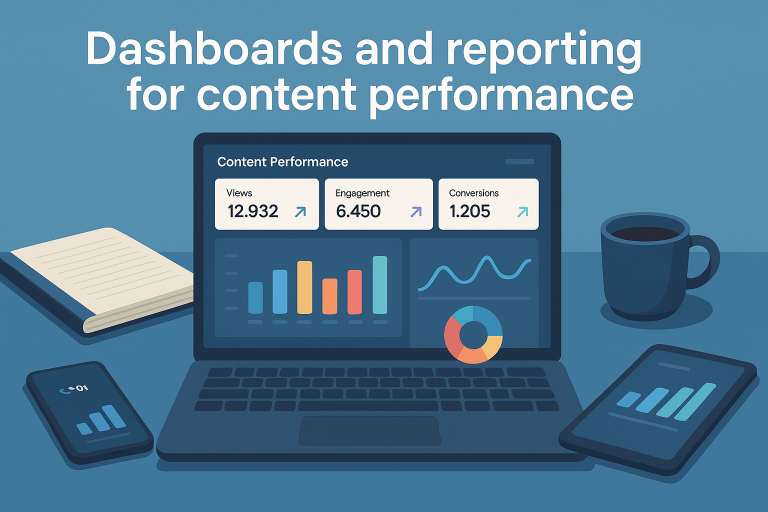
Creating effective dashboards and reporting for content performance should be part of your implementation plan to ensure attribution insights are accessible to stakeholders.
Attribution for Different Business Types and Industries
Attribution models must be adapted to your specific industry and business model. Here’s how different sectors approach attribution and the unique considerations each faces.
E-commerce Attribution
E-commerce businesses typically benefit from shorter attribution windows (7-30 days) and models that emphasize recent interactions. Key considerations include:
- Product-level attribution to identify which marketing efforts sell specific products
- Cart abandonment recovery attribution
- Repeat purchase attribution vs. new customer acquisition
- Seasonal buying pattern adjustments
ASOS, the online fashion retailer, implemented a custom attribution model that gave higher credit to discovery channels for new customers and more weight to email and retargeting for returning customers, resulting in a 30% improvement in marketing efficiency.
B2B Attribution
B2B companies face longer sales cycles with multiple stakeholders, requiring specialized attribution approaches:
- Extended lookback windows (90+ days)
- Account-based attribution rather than individual-focused
- Multi-stakeholder journey mapping
- Integration with CRM data for sales touchpoints
- Lead quality and MQL/SQL transition attribution
Salesforce found that their average B2B customer interacted with 8+ pieces of content before becoming sales-ready, leading them to implement a custom attribution model that specifically valued executive briefings for thought leadership content higher in the attribution sequence.
Subscription Business Attribution
Subscription-based businesses need to focus on both acquisition and retention attribution:
- Customer Lifetime Value (CLV) as the core attribution metric
- Attribution models that extend beyond initial conversion
- Churn prevention touchpoint valuation
- Upgrade and cross-sell attribution
Streaming services like Netflix attribute value not just to the channels that drive sign-ups but also to the content recommendations that increase engagement and reduce churn, creating a lifetime value impact from content-led growth.
Content Publishers and Media
Media companies and content publishers have unique attribution needs:
- Attribution models that value engagement metrics (time on site, pages per session)
- Ad view and ad click attribution separation
- Subscription conversion paths for paywalled content
- Newsletter and social media attribution for content discovery
The New York Times developed a custom attribution model that specifically values “habituation touchpoints” that lead readers to form regular reading habits, as these strongly correlate with subscription conversions.
Attribution Model Tools and Platforms Comparison
Numerous tools and platforms offer attribution modeling capabilities, each with distinct features, limitations, and price points. This comparison will help you select the right technology for your attribution needs.
| Platform | Best For | Model Types | Price Range | Implementation Complexity | Key Strengths |
|---|---|---|---|---|---|
| Google Analytics 4 | Small to mid-size businesses | Last-click, First-click, Linear, Position-based, Time-decay, Data-driven | Free | Medium | Free data-driven attribution, Google Ads integration |
| Adobe Analytics | Enterprise organizations | All standard models plus custom models with Attribution IQ | $$$$ (Enterprise pricing) | High | Advanced customization, cross-channel capabilities |
| Mixpanel | Product-led companies | First-touch, Last-touch, Linear, Custom | $$-$$$ | Medium | Strong product analytics integration, user-centric |
| HubSpot | B2B marketing teams | First, Last, Linear, Position, Custom | $$-$$$ | Low | CRM integration, revenue attribution |
| AppsFlyer/Branch | Mobile app marketers | Mobile-specific attribution models | $$-$$$ | Medium | Mobile app specialization, fraud prevention |
| Custom Solution | Complex attribution needs | Fully customizable | $$$$ | Very High | Complete flexibility, proprietary modeling |
When selecting an attribution platform, consider these key factors:
- Integration capabilities with your existing marketing stack
- Data privacy compliance features
- Reporting flexibility and visualization options
- Technical support and implementation assistance
- Scalability as your marketing complexity grows
Most organizations begin with the attribution capabilities in their primary analytics platform (like GA4) and graduate to specialized tools as their attribution needs become more sophisticated.
Attribution Challenges and Limitations: What Models Can’t Tell You
While attribution models provide valuable insights, they have inherent limitations and face growing challenges. Understanding these constraints is crucial for interpreting attribution data accurately.
Data Fragmentation and Silos
Modern marketing happens across numerous platforms, each with its own data collection:
- Website analytics capture only web-based interactions
- Social platforms have limited visibility beyond their ecosystems
- CRM systems track sales interactions but miss marketing touches
- Email platforms measure engagement but not downstream impact
This fragmentation creates blind spots in attribution. According to Forrester Research, the average enterprise uses 28 different marketing technology tools, making complete data integration challenging.
Privacy Regulations and Tracking Prevention
Privacy changes significantly impact attribution capabilities:
- GDPR and CCPA restrict data collection without explicit consent
- iOS 14+ App Tracking Transparency limits mobile attribution
- Browser tracking prevention (ITP in Safari, similar features in Firefox and Chrome)
- Cookie deprecation plans from major browsers
These changes can reduce tracking coverage by 30-70% depending on your audience and geography. A study by AppsFlyer found that iOS tracking opt-in rates average just 25% post-iOS 14.
Cross-Device and Offline Challenges
Customer journeys frequently cross between devices and between online and offline:
- The average consumer uses 3.5 connected devices (Google research)
- 78% of local mobile searches result in offline purchases (Think with Google)
- Phone calls and in-store visits often go unattributed
- Word-of-mouth and brand influence remain largely unmeasured
Even sophisticated attribution systems capture only a portion of these cross-environment journeys.
Statistical Validity and Attribution Bias
Attribution models contain inherent biases:
- Correlation vs. causation confusion (did the touchpoint cause the conversion?)
- Selection bias (focusing only on converted paths)
- Recency bias (overvaluing recent interactions)
- Insufficient data for statistical significance
- Failure to account for external factors (seasonality, competition, etc.)
Research by Marketing Evolution suggests that up to 32% of marketing investments are wasted due to poor attribution data quality.
Solutions and Workarounds
While perfect attribution remains elusive, these approaches can improve accuracy:
- Incrementality testing: Measure lift from controlled experiments rather than relying solely on attribution
- Unified measurement frameworks: Combine attribution with marketing mix modeling for macro and micro views
- Probabilistic matching: Use statistical methods to connect anonymous customer interactions
- First-party data strategies: Shift to collecting consented first-party data
- Directional interpretation: Use attribution for trends and patterns rather than exact credit
As Christopher Penn, Chief Data Scientist at Trust Insights, notes: “No attribution model is perfect. The best approach is to use multiple models in parallel and look for consistent patterns across them.”
Privacy-First Attribution: Strategies for a Cookieless Future
As third-party cookies disappear and privacy regulations tighten, attribution modeling must evolve. These privacy-first strategies will help you maintain marketing measurement capabilities while respecting user privacy.
First-Party Data Strategy
First-party data, collected directly from your audience with consent, becomes the foundation of privacy-compliant attribution:
- Implement user registration/login systems to maintain identity
- Create value exchanges that encourage users to identify themselves
- Build progressive profiling to enrich first-party data over time
- Develop a Customer Data Platform (CDP) strategy to unify first-party data
- Implement server-side tracking to reduce reliance on client-side cookies
Companies like The New York Times have shifted to a first-party data strategy called “Project Anubis” that maintains attribution capabilities while eliminating third-party cookies entirely.
Consent Management and Privacy by Design
Incorporate privacy compliance into your attribution architecture:
- Implement transparent consent management for all tracking
- Build privacy preference centers that give users control
- Create attribution models that function at different consent levels
- Apply data minimization principles (collect only what’s needed)
- Implement proper data retention policies that align with regulations
According to KPMG, 86% of consumers are concerned about data privacy, while 75% are willing to share data with brands they trust. Building this trust requires transparent attribution practices.
Aggregated Measurement Approaches
Privacy-preserving measurement techniques focus on aggregate data rather than individual tracking:
- Google’s Privacy Sandbox initiatives (Topics API, FLEDGE)
- Facebook’s Aggregated Event Measurement
- Aggregated conversion modeling and extrapolation
- Cohort-based analysis instead of individual user journeys
- Differential privacy techniques that add “noise” to protect individuals
For example, Google Analytics 4 now uses conversion modeling to fill gaps in data when users haven’t consented to tracking, providing statistically valid attribution insights without tracking every user.
Data Clean Rooms
Data clean rooms provide privacy-compliant environments for attribution analysis:
- Secure environments where first-party data can be matched without data sharing
- Allow analysis on combined datasets while maintaining privacy
- Enable attribution across platforms without exposing user identities
- Providers include Google Ads Data Hub, Amazon Marketing Cloud, and Snowflake
Major brands like P&G and Unilever are investing in clean room technology to maintain attribution capabilities while enhancing privacy compliance.
Privacy Compliance Checklist by Region
Ensure your attribution system complies with regional regulations:
- Europe (GDPR): Explicit consent before tracking, right to be forgotten, data portability
- California (CCPA/CPRA): Disclosure of data collection, opt-out rights, data access
- Brazil (LGPD): Similar to GDPR with consent requirements and data subject rights
- Global best practice: Implement the strictest requirements across all regions
According to Gartner, organizations that adopt privacy-first attribution approaches will outperform peers in marketing ROI by 30% by 2025.
Advanced Attribution Approaches: Machine Learning, Incrementality, and Beyond
Advanced attribution approaches leverage machine learning, incrementality testing, and integrated measurement frameworks to overcome traditional attribution limitations and provide more accurate insights.
Machine Learning Attribution
Machine learning attribution uses algorithms to dynamically assign credit based on observed patterns:
- Analyzes thousands of customer journeys to identify patterns
- Compares converting and non-converting paths to determine influence
- Updates attribution weights automatically as data patterns change
- Accounts for interactions between channels (synergy effects)
- Identifies non-linear relationships invisible to rule-based models
Implementation requires:
- Sufficient conversion volume (typically 1000+ conversions per month)
- Clean, consistent tracking data across all channels
- Integration of online and offline touchpoint data
- Proper training and validation datasets
- Regular model retraining as market conditions change
Google’s data-driven attribution and Adobe’s algorithmic attribution are accessible implementations of machine learning attribution, though custom solutions can be built for specific business needs.
Incrementality Testing
Incrementality testing measures the true causal impact of marketing activities:
- Uses controlled experiments (A/B tests) to isolate channel impact
- Compares test groups (exposed to marketing) with control groups (unexposed)
- Measures the lift attributable to specific channels or campaigns
- Bypasses attribution model limitations by measuring actual impact
- Provides ground truth for validating attribution models
Implementation framework:
- Identify the channel or campaign to test
- Create statistically valid test and control groups
- Ensure groups are truly comparable (randomization)
- Run the experiment for sufficient time (typically 2-4 weeks)
- Measure lift in conversion rates, revenue, or other KPIs
- Calculate ROI based on incremental value, not attributed value
Facebook’s Conversion Lift and Google’s Conversion Lift studies are platform-specific incrementality testing tools, but the approach can be applied across any channel.
Unified Measurement
Unified measurement integrates multiple attribution approaches for a complete view:
- Combines multi-touch attribution (MTA) for granular, tactical insights
- Integrates marketing mix modeling (MMM) for strategic, long-term view
- Incorporates incrementality test results to calibrate both models
- Connects short-term and long-term marketing effects
- Accounts for both online and offline channels
Implementation steps:
- Establish MTA for granular digital channel attribution
- Develop MMM for broad channel allocation including unmeasurable touchpoints
- Use incrementality tests to validate and calibrate both models
- Create a unified reporting framework that connects all three approaches
- Use MTA for tactical optimizations and MMM for strategic planning
According to the World Federation of Advertisers, organizations implementing unified measurement frameworks see 15-30% improvements in marketing effectiveness.
Case Study: Advanced Attribution in Action
Netflix implemented a machine learning attribution system that:
- Integrated CTV, mobile, and web viewing data with marketing exposures
- Used incrementality testing to validate algorithmic attribution findings
- Identified that certain content previews had 3x the attributed value previously assigned
- Discovered non-intuitive channel interactions that traditional models missed
- Resulted in 23% improvement in subscriber acquisition efficiency
The system’s success depended on Netflix’s rich first-party data environment and commitment to experimentation.
Content Attribution Models: Measuring Content Marketing Effectiveness
Content marketing presents unique attribution challenges due to its often upper-funnel role and longer influence cycles. These specialized content attribution approaches help demonstrate content marketing’s full value.
Content attribution requires different approaches because content typically:
- Influences decisions over longer periods than ads
- Serves multiple purposes (education, trust-building, SEO)
- Generates value beyond direct conversions
- Often exists outside the final conversion path
Content-Specific Attribution Methodologies
Several attribution approaches address content’s unique characteristics:
- Content Influence Model: Tracks content consumption before conversion, even if content wasn’t the last touch
- Content Velocity Model: Measures how content accelerates movement through the funnel
- Content Value Model: Assigns economic value to content engagement metrics
- Content Journey Model: Maps sequences of content interactions that lead to conversion
These models help establish the connection between what makes good content marketing ROI and the specific content pieces driving that return.
Key Content Attribution Metrics
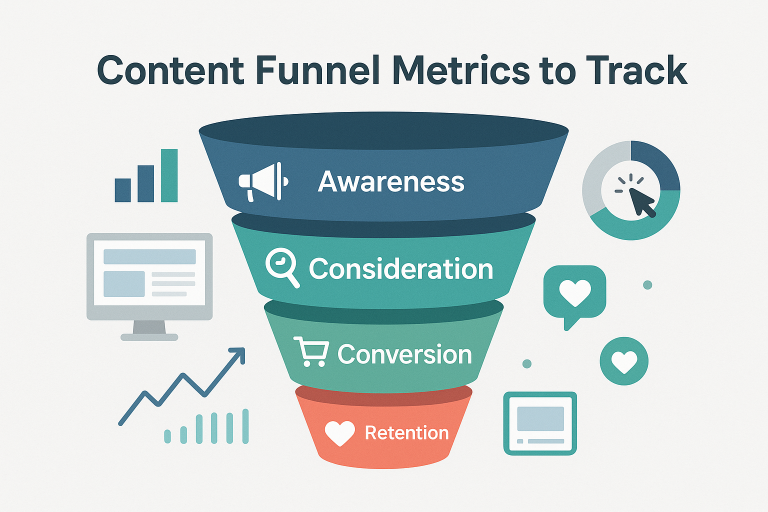
Effective content attribution tracks these metrics:
- Content Consumption Before Conversion: Types and volume of content viewed
- Content Engagement Depth: Time spent, scroll depth, interactions
- Return Visitor Content Patterns: Content that drives repeat visits
- Micro-Conversions: Email signups, content downloads, webinar registrations
- Assisted Conversions: When content appears earlier in converting paths
- Lead Quality Correlation: Relationship between content consumption and lead quality
Content Journey Mapping Techniques
Content journey mapping visualizes how users interact with content before conversion:
- Identify all content touchpoints in converting paths
- Categorize content by type, topic, and funnel stage
- Analyze common content sequences that lead to conversion
- Identify high-value content combinations
- Determine average content touchpoints needed before conversion
According to research by the Content Marketing Institute, B2B buyers consume an average of 13 pieces of content before making a purchase decision, making journey mapping essential for understanding content’s role.
Content Scoring and Lead Scoring Integration
Content scoring systems quantify content effectiveness:
- Assign point values to different content interactions
- Weight content based on topic relevance and depth
- Integrate content consumption into lead scoring models
- Track content “chains” that frequently appear in conversion paths
- Use machine learning to refine content value weights over time
HubSpot found that prospects who read 3+ blog posts were 20% more likely to become customers, data that informed their content scoring model.
Implementation Guide for Content Attribution
Follow these steps to implement content attribution:
- Tag all content with consistent categories, topics, and funnel stages
- Implement content engagement tracking (scroll depth, time on page)
- Connect content consumption to user profiles in your CRM
- Create content-specific segments in your analytics platform
- Build assisted conversion reports focusing on content touchpoints
- Develop content journey visualization reports
- Establish content performance benchmarks by type and topic
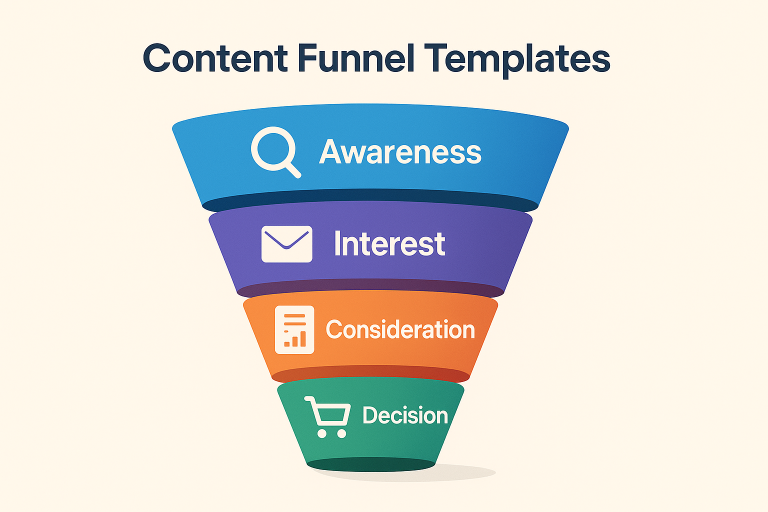
Properly implemented content attribution helps you build effective content funnel templates based on actual user behavior data rather than assumptions.
Case Study: Content Attribution in Practice
Salesforce implemented a content attribution system that revealed:
- Technical whitepapers read early in the buying process correlated with 40% higher deal sizes
- Case study consumption reduced sales cycles by an average of 23%
- Prospects who engaged with 5+ pieces of content had 2.3x higher conversion rates
- Certain content combinations (blog + webinar + demo) had 3x the conversion rate of others
These insights allowed Salesforce to optimize content production and promotion to maximize ROI.
Organizational Implementation: Building an Attribution-Focused Culture
Successful attribution modeling requires more than technology, it demands organizational alignment, proper governance, and a data-driven culture. Here’s how to build attribution capabilities throughout your organization.
In my 25 years of experience in digital marketing, I’ve seen many attribution systems fail not because of technical issues but because of organizational resistance. Building the right team structure and processes is as important as the attribution model itself.
Cross-Functional Attribution Team Structure
Effective attribution requires collaboration across departments:
- Marketing Analytics: Technical implementation and maintenance
- Channel Marketing Teams: Campaign tagging and implementation
- Marketing Leadership: Strategic decision-making based on insights
- IT/Development: Technical support for tracking implementation
- Sales: CRM integration and feedback on lead quality
- Finance: Connecting attribution to business outcomes and ROI
Create a dedicated attribution working group with representatives from each area that meets regularly to review attribution data and recommend optimizations.
Roles and Responsibilities
Clear ownership drives attribution success:
- Attribution Owner: Overall responsibility for attribution strategy and accuracy
- Data Stewards: Ensure clean, consistent data collection across channels
- Channel Managers: Proper campaign tagging and tracking implementation
- Analysts: Build reports, surface insights, and recommend optimizations
- Executive Sponsor: Drive organizational adoption and resolve conflicts
Document these roles in a RACI matrix (Responsible, Accountable, Consulted, Informed) to clarify who does what in the attribution process.
Change Management for Attribution Adoption
Attribution often challenges existing assumptions and power structures. Manage this change with:
- Executive sponsorship and clear mandate
- Education on attribution benefits and limitations
- Phased implementation with early wins
- Channel-specific transition plans
- Performance evaluation alignment with attribution insights
- Regular sharing of attribution success stories
My experience working with dozens of organizations has shown that change management is often the biggest hurdle in attribution implementation. Teams accustomed to getting credit in last-click models may resist multi-touch approaches that distribute credit more broadly.
Attribution Governance Framework
Establish clear governance to maintain attribution integrity:
- Data Quality Standards: UTM naming conventions, tracking requirements
- Model Review Cadence: Regular validation of model accuracy
- Decision Authority: Who can modify attribution models and rules
- Conflict Resolution Process: How to handle attribution disputes
- Documentation Requirements: Maintaining knowledge of implementation
Document your attribution governance in a central repository accessible to all stakeholders.
Attribution Reporting Cadence
Establish a regular rhythm of attribution reporting:
- Weekly: Tactical campaign attribution for active optimization
- Monthly: Channel performance review and budget adjustment
- Quarterly: Attribution model validation and strategic review
- Annually: Comprehensive attribution audit and model reassessment
Include both standard reports and ad-hoc analysis capabilities to answer emerging questions.
Case Study: Organizational Attribution Transformation
A global B2B technology company implemented a new attribution system with these organizational elements:
- Created a dedicated Attribution Center of Excellence with cross-functional membership
- Developed a phased rollout plan starting with digital channels
- Implemented a “parallel reporting” period showing both old and new attribution
- Created channel-specific transition plans with tailored education
- Aligned performance bonuses with overall marketing performance rather than channel-specific metrics
The result was 90% organizational adoption within six months and a 22% improvement in marketing ROI through better budget allocation.
The Future of Attribution: Emerging Trends and Predictions
Attribution modeling continues to evolve rapidly in response to technological changes, privacy regulations, and marketing complexity. These emerging trends will shape the future of marketing measurement.
AI and Machine Learning Evolution
Artificial intelligence will transform attribution capabilities:
- Predictive attribution that forecasts future channel performance
- Automated budget allocation based on real-time attribution insights
- Natural language interfaces for attribution questions
- Anomaly detection that identifies attribution data issues
- Self-optimizing models that continuously refine attribution rules
Google’s announcement of their AI-driven Performance Max campaigns shows the direction toward automated optimization based on attribution signals.
Privacy-Preserving Measurement
As privacy regulations tighten, new measurement approaches will emerge:
- Edge computing for on-device attribution without data sharing
- Federated learning systems that train attribution models without central data collection
- Zero-knowledge proofs that verify conversions without revealing user data
- Advanced data clean rooms with enhanced privacy guarantees
- Privacy-preserving machine learning that maintains accuracy with less data
The Chrome Privacy Sandbox initiative offers a glimpse of these approaches, with APIs like Attribution Reporting designed to provide conversion measurement without cross-site tracking.
Cross-Platform Integration
Attribution will increasingly connect previously siloed environments:
- Connected TV and streaming attribution integration with digital channels
- Online-to-offline measurement without individual identity tracking
- Cross-platform identity graphs built on consented first-party data
- Unified customer journey analytics across owned and paid channels
- Voice, IoT, and emerging channel attribution integration
Nielsen’s recent launch of cross-media measurement solutions signals the industry’s movement toward holistic measurement across traditional and digital channels.
Real-Time Attribution
Attribution will move from retrospective to real-time:
- Stream-based attribution processing for immediate insights
- Dynamic budget allocation based on real-time attribution signals
- In-flight campaign optimization using attribution predictions
- Real-time content recommendations based on attribution patterns
- Instant attribution visualization for marketing decision-makers
The trend toward real-time optimization is already visible in programmatic advertising platforms that adjust bidding based on conversion likelihood.
Expert Predictions
Leading attribution specialists offer these predictions:
- Avinash Kaushik predicts “the end of channel-centric thinking” as attribution shifts to audience-centric models
- Christopher Penn forecasts “synthetic data models” that maintain attribution accuracy while enhancing privacy
- Julie Fleischer (former Kraft data leader) predicts “attention-based attribution” will become the new standard for content evaluation
- Kevin Hillstrom (MineThatData) suggests “incrementality will replace attribution” as the primary measurement approach
My own prediction based on working with dozens of organizations is that we’ll see greater polarization between simplified attribution for small businesses and highly sophisticated unified measurement approaches for enterprises, with the middle ground shrinking.
Timeline for Key Developments
- Next 1-2 years: Privacy-first attribution becomes standard as third-party cookies disappear
- 2-3 years: AI-powered predictive attribution becomes accessible to mid-market companies
- 3-5 years: Cross-platform attribution without individual tracking becomes the norm
- 5+ years: Fully automated attribution and budget optimization systems emerge
Conclusion: Building an Adaptable Attribution Strategy
Attribution modeling is not a one-time implementation but an ongoing process of refinement and adaptation. This conclusion offers key takeaways and next steps for developing your attribution strategy.
Key takeaways from this comprehensive guide include:
- Attribution models exist on a spectrum from simple single-touch approaches to sophisticated algorithmic systems
- The right model depends on your business type, sales cycle, and technical capabilities
- Implementation requires both technical setup and organizational alignment
- Privacy changes necessitate new approaches to attribution measurement
- Advanced techniques like incrementality testing and unified measurement provide more accurate insights
- Content attribution requires specialized approaches to capture full value
- The future of attribution will be shaped by AI, privacy regulations, and cross-platform integration
Next steps for your attribution journey should include:
- Assess your current attribution approach against business needs
- Audit your tracking implementation for data quality issues
- Select an attribution model appropriate for your business complexity
- Develop a phased implementation plan with clear milestones
- Create cross-functional teams to support attribution adoption
- Build regular reporting and optimization processes
- Plan for privacy changes with first-party data strategies
- Test advanced approaches as your attribution maturity grows
As Christopher Penn wisely notes, “The perfect attribution model doesn’t exist, but the useful one does.” Focus on building an attribution system that helps you make better marketing decisions, even if it doesn’t capture every nuance of the customer journey.
By approaching attribution as an ongoing capability rather than a one-time project, you’ll develop measurement systems that evolve with your business, technology, and the regulatory landscape, providing sustainable competitive advantage through more efficient marketing investment.